
Technological Change, Depletion
and the U.S. Petroleum Industry***
John T. Cuddington* and Diana L. Moss**
June 18, 1998 version
WP6.0: tech_chg.wpd
* Economics Department, Georgetown University. Helpful discussions with colleagues Doug Brown and Bob Cumby are gratefully acknowledged.
** Office of Economic Policy, Federal Energy Regulatory Commission. The views and findings expressed in this paper are those of the authors alone.
*** An earlier version of this paper was entitled "The Finding Cost of Natural Gas: Technological Change versus Resource Depletion." It considered only nonassociated natural gas, whereas this paper also looks at crude oil finding costs.
Abstract
Technological Change, Depletion
and the U.S. Petroleum Industry***
A common claim in the nonrenewable resource literature is that improvements in technology may largely offset the effects of increasing scarcity over time. This study provides perhaps the first empirical evidence on this issue by analyzing the determinants of the average finding cost for additional petroleum in the U.S. over the 1967-90 period. A new index of the level of technology is developed. Using this index and taking other determinants into account, average cost functions for natural gas and crude oil reserve additions, respectively, are estimated. These functions enable us to isolate the separate effects of depletion and technological improvement in each segment of the industry. We also carry out counter-factual simulations for average finding costs in a scenario with "no technological improvement." The analysis suggests that technological change played a major role in allaying what would otherwise have been a sharp rise in the average cost of finding additional reserves of natural gas. The impact of technological change on finding costs for U.S. crude oil reserves has been more modest.
JEL Classification: D24 Production; Capital and Total Factor Productivity
Q31 Nonrenewable Resources and Conservation: Supply and Demand
L71 Industry Studies: Primary Products (Mining, Extraction, and Refining: Hydrocarbon Fuels)
key words: technological change, productivity growth, cost functions, cointegration,
error correction model, quality ladders model, varieties model, nonrenewable resource depletion.
Technological Change, Depletion
and the U.S. Petroleum Industry
In recent years there has been renewed interest in the causes and consequences of technological change. At the macroeconomic level, a huge literature modeling the impact of technological innovation on economic growth and living standards has emerged. (See, e.g., Romer (1990) and Grossman and Helpman (1991).) At the micro level, increasingly sophisticated methods are being used to assess the links between technological change, productivity, and average or marginal costs at the sectoral level. (Kortum and Lach (1995) is a recent example.)
In the resource and environmental economics literature, the potential effects of technological change in alleviating the increasing scarcity of nonrenewable resources are much discussed. The simplest variant of the Hotelling (1931) model predicts that nonrenewable resource prices should rise at a rate equal to the real rate of interest. It is well known, however, that "[W]hile this is true for the special case in which the initial endowment of the resource is fixed and marginal production cost is zero, it will not in general be true. If technical progress in extraction is sufficiently rapid, it is possible that price of the resource may remain constant or even decline over time." (Epple (1975, p.65)) (1)
The empirical failure of Hotelling's theoretical predictions is well known. (See, e.g., Barnett and Morse (1963), Slade (1962).) This failure has been credited in part to technological change. On one hand, improvements in technology may lead to the use of synthetic substitutes for nonrenewable resources. On the other, they may facilitate more efficient exploration for additional reserves, thereby potentially offsetting the depletion effect on resource prices. As a result, elaborations on the simple Hotelling model have incorporated the effects of uncertainty and technical change in modeling optimal resource exploration and extraction. (See, e.g., Bohi and Toman (1984), Dasgupta and Heal (1974), Devarajan and Fisher (1982), Kamien and Schwartz (1978) and Pindyck (1978).) Much of this effort has been devoted to specifying and estimating finding or discovery costs. (See, e.g., Livernois (1988), Livernois and Ryan (1989), Livernois and Uhler (1987) and Uhler (1979).)
The focus of this paper is the U.S. petroleum sector. It is commonly argued that technological improvements have reduced the cost of adding to petroleum reserves by improving the productivity of the finding process (i.e., exploration and development (E&D)). (See, e.g., National Petroleum Council (1992).) Although considerable anecdotal evidence exists, there are few, if any, quantitative assessments of the importance of technological advance in the petroleum industry. In fact, Livernois (1988, p.383) concludes:
One cannot expect to capture the separate effects of depletion and technological change by including two highly correlated trend variables in the cost function. Rather, the best one can do is to capture the net effects of depletion and technological change.
This paper attempts to fill this void. We focus on E&D activity for nonassociated natural gas(2) and crude oil reserves where depletion has its primary impact on costs.
The petroleum industry is of general interest because it has benefited from dramatic changes in state-of-the-art E&D and production technology. Technological advances such as three-dimensional seismic techniques, polycrystalline diamond compact drill bits, horizontal drilling, and offshore platforms capable of operating in hostile, deep-water environments are widely acknowledged to have had significant impact on productivity in E&D. (See, e.g., American Gas Association (1990), National Petroleum Council (1987), and Tippee and Beck (1991).)
Section I of the paper describes the rationale and methodology for isolating the diffusion of new technologies in the petroleum sector. The number of diffusions (i.e., technologies that come into widespread commercial use) in each year is an index of technological change. It is briefly compared to other proxies in the literature, specifically patents and research and development (R&D) expenditures. The qualitative and time series properties of our index over the 1947-90 period are discussed. Past studies of technological change have isolated inventions and innovations (the precursors of diffusions) by date. See, e.g., NPC (1966), Schmookler (1966) and Williamson (1959) for studies of the petroleum industry. However, the primary application of such studies is limited to examining the statistical attributes of various series of inventions and innovations (Sahal (1974, 1983)).
Section II derives average finding cost functions based on two variants of the technology index in the underlying production function: the technology varieties (TV) model and the quality ladders (QL) model. The models provide alternative specifications of how technology impacts factor productivity, given drilling and geological and geophysical (G&G) inputs. Both imply average finding cost functions that depend on the cumulative number of diffusions to date--our proxy for the level of technology.
Section III presents OLS and instrumental variable (IV) estimates of the average finding cost functions based on the TV and QL models. The resulting estimates are used to isolate the offsetting influences of technological improvements and ongoing resource depletion; counter-factual simulations for various "no technological change" scenarios are presented and compared with the historical time paths for average finding costs. Section IV discusses a new approach for estimating finding cost functions using error correction models (ECMs). This approach permits appropriate opinion of long-run finding cost functions (avoiding possible spurious regression problems in the existing literature), while allowing for complicated short-run dynamics. Estimated ECMs are then used to carry out simulations for average finding cost based on forecasted rates of technological change, and alternative time paths based on the assumption of no technological change (analogous to those in Section III). Section V concludes. Methodological details on our technology diffusion series can be found in Appendix I. Appendix II discusses how natural gas and crude oil finding costs were determined.
Resource discovery results in additions to the existing stock of proved reserves.(3) Adding reserves takes two types of effort, exploration and development, both of which have evolved over time as existing techniques and equipment are improved or replaced with new technology. In the finding process, technological progress has increased the probability of finding producible oil or gas (i.e., avoiding "dry holes"). Technological improvements may also produce more accurate estimates of the quantity of reserves once a discovery is made.
The current state of technology is constantly evolving. At any point in time, there exist mature techniques and equipment that are in widespread use and a set of experimental and commercially immature technologies that eventually will improve upon or replace those currently in use. The evolutionary process most successful technologies pass through is often called the invention-innovation-diffusion cycle. An invention is a model or idea for an improved product or process. An innovation is the first commercial transaction of the product or process; diffusion is widespread adoption (Stoneman (1983)). The impact of technology on standard production or cost functions should, in principle, reflect the latter.
Proxies for Technological Change
Measuring technology for inclusion in estimated production or cost functions is a difficult task. Two widely employed proxies for technological change (which in turn are cumulated to get a proxy for the level of technology) are research and development (R&D) spending and patenting activity. For several reasons, these proxies mismeasure the amount and timing of technological improvements in production activities. As Fig.1 suggests, R&D effort gives rise to inventions and innovations. Some of these ultimately result in diffusions, but many do not. Furthermore, some innovations may not be a direct consequence of measured R&D spending in the petroleum sector. A number of E&D innovations in the petroleum sector were actually developed in other industrial sectors. For example, some advances in deep-water offshore technology, such as remotely operated vehicles, originated in the marine industry. Thus, R&D spending by the petroleum industry itself probably understates the true level of effort to improve the state of technology.
Not all R&D spending results in successful technologies, as some inventions are never commercialized (Mansfield (1971)). A measure of technological change that includes expenditure or effort on unsuccessful developments may misstate the effect of technology in improving productivity. Not all innovations become fully diffused throughout the industry; many newly commercialized techniques fail. For instance, technology for recovering oil from shales in western Colorado in the late 1970s and early 1980s was economic at oil prices of 30 to 35 dollars per barrel--prices the industry never saw.
Patenting activity--another common measure of technological activity--poses similar problems. Not all patented ideas or inventions are commercially successful. Conversely, many successful ideas, products, or processes are never patented.(4) Thus, like R&D spending, patenting activity can also over or understate the rate of technological improvement. Both R&D and patenting activity can predate the actual diffusion of resulting technologies by years or even decades.
In the next section, an alternative, and arguably preferable, proxy for technological change is developed. We attempt to identify actual diffusions, i.e., new techniques or technologies when they first come into widespread commercial use. Ideally, this approach captures only successful advances -- in contrast to measures based on R&D spending and patenting activity -- and at the point in time where they would be expected to increase total factor productivity. The number of diffusions in a given year is used in what follows as a proxy for the overall rate of technological change; the cumulative total is a measure of the level of technology.
Of course, this measure is not without flaws. The count of newly diffused technologies does not weight them by their relative impact on productivity. Some diffusions, or patents, are obviously more important than others.(5) Counting actual diffusions, however, avoids counting failures and excluding unpatented successes and is temporally more accurate. R&D spending is a rough proxy for the magnitude (rather than a count variable) of R&D effort, but it is furthest removed from the actual diffusion process.
The Series of Technology Diffusions
Studies of petroleum discovery technology generally draw on a rich body of technical and trade literature. In large part, however, they are not oriented toward identifying when and for how long a technological development could be considered an invention, innovation or diffused throughout the industry. A 1966 study by the National Petroleum Council (NPC) contains developmental histories of more than two hundred technologies used for discovering and recovering petroleum from 1947 to 1965. The study identifies three developmental stages for the technologies investigated over the study period: experimental--field testing (in infancy); semi-proven--gaining acceptance (youthful); and accepted in general practice (mature). These stages correspond closely to the invention-innovation-diffusion cycle discussed in the previous section. A technology in the first year of the third stage can be considered "diffused." For the period 1947 to 1965, 89 diffusions were identified.
The NPC study served as a template for our compilation of diffusions, by date, for the period 1966 to 1990. Four steps were involved in developing the series of technology diffusions: (i) gathering information on relevant technologies; (ii) sorting information by year, type of development and category of discovery; (iii) compiling a chronology of technological developments for each category of discovery technology; and (iv) identifying the technologies that could be considered diffused by year. Appendix I and Moss (1993) provide more detail on the development of the series. This process produced a list and dating of 116 technology diffusions. With those identified from the NPC study, the number of diffusions totals 205.
Characteristics of Technology Diffusions
The annual number of technology diffusions between 1947 and 1990 is shown in Fig. 2. It displays qualitative and time series characteristics that provide some valuable insight into technological change in the petroleum industry.
Qualitative Characteristics
About one tenth of total diffusions involve new computer technologies or the application of computer technology to existing techniques or equipment. Computerization has occurred primarily in the areas of (i) seismology and (ii) reservoir rock and fluid systems evaluation and, to a lesser extent, in drilling. The majority of computer-related diffusions occurred after 1970, as shown in Table 1, reflecting the increasing adoption of computers in many areas of the economy around that time. In the petroleum industry, computers have made possible the rapid processing of large amounts of data, transmission of data from remote locations to central offices and an enhanced ability to interpret data (e.g., with computer graphics). For example, the first computer-related diffusion in seismology was the interpretation of exploration gravity measurements using mainframe computer systems around 1961.(6) Digital processing of seismic data became diffused around 1965. The next major advance was the application of microcomputers and interactive mainframe and terminal systems beginning in the 1980s. Computers have also been responsible for the series of improvements in explorationists' ability to simulate the behavior of fluids in reservoirs.
| TABLE 1
DIFFUSIONS OF COMPUTER TECHNOLOGY IN E&D (1947-1990) | |||
| Year | |||
| 1 | Exploration Gravity Measurement | Computer Interpretation | 1961 |
| 2 | Prediction Methods | Mathematical Models Using Digital Computers | 1962 |
| 3 | Reservoir Rock and Fluid Systems Evaluation |
Sophisticated Computer Analysis of Well Logs |
1963 |
| 4 | Reservoir Rock and Fluid Systems Evaluation |
Computer Evaluation of Formations |
1965 |
| 5 | Seismology | Digital Data Processing | 1965 |
| 6 | Reservoir Rock and Fluid Systems Evaluation |
Computer Interpretation of Temperature Logs |
1968 |
| 7 | Seismology | Seismic Velocity Analysis | 1969 |
| 8 | Seismology | Reprocessing Paper Seismograms | 1970 |
| 9 | Seismology | Common Depth Point Stacking | 1971 |
| 10 | Reservoir Rock and Fluid System Evaluation | Numerical Reservoir Simulation (2-Dimensional, First Generation) | 1971 |
| 11 | Drilling | Computerized Systems for Drilling Control/Prediction | 1971 |
| 12 | Seismology | Multi processing of Seismic Data | 1972 |
| 13 | Reservoir Rock and Fluid System Evaluation | Numerical Reservoir Simulation (2-Dimensional, First Generation) | 1971 |
| 14 | Seismology | Common Reflection Point Stacking | 1972 |
| 15 | Seismology | Computer Mapping | 1973 |
| 16 | Seismology | Wide Line Profiling | 1974 |
| 17 | Seismology | 2-Dimensional Seismic | 1975 |
| 18 | Drilling | Computerized Drilling Optimization (Telemetry) | 1977 |
| 19 | Drilling | Computerization of Drilling Data (online and off-line) | 1978 |
| 20 | Seismology | 3-Dimensional Seismic | 1981 |
| 21 | Reservoir Rock and Fluid Systems Evaluation | Numerical Reservoir Simulation (3-Dimensional, Second generation) | 1982 |
| 22 | Stratigraphy | Analysis of Porosity/Permeability Data | 1983 |
| 23 | Drilling | Computerized Transmission of Drilling Data (Telemetry) | 1983 |
| 24 | Seismology | 3-Dimensional Seismic (Improvement) | 1984 |
| 25 | Seismology | Vertical Seismic Profiling | 1984 |
| 26 | Seismology | Personal Computers | 1985 |
| 27 | Drilling | Computer-Aided Optimization of Drilling Hydraulics | 1986 |
| 28 | Seismology | Zoned Auto-Picking Software | 1987 |
| 29 | Seismology | Databases of Drilling Variables | 1988 |
| 30 | Reservoir Rock and Fluid Systems Evaluation |
Computer-Aided Calculation of Pore Pressure |
1990 |
| 31 | Reservoir Rock and Fluid Systems Evaluation | Numerical Reservoir Simulation (3-Dimensional, Third generation) | 1990 |
| 32 | Seismology | Computer Aided Exploration Systems (CAEX) | 1990 |
In drilling, computerization permits the integration of many variables such as bit speed, weight on the bit and angle to optimize different aspects of drilling operations. This technology has likely resulted in significant improvements in productivity associated with more efficient use of equipment (i.e., less need to replace bits and broken drill strings) and avoided downtime during drilling operations. The creation of computerized drilling databases also allows firms to use historical experience to improve their operations in similar geographic areas and geologic formations.
About one-fifth of total diffusions comprise the technology for evaluating hydrocarbon-bearing rock formations (e.g., well logging and testing). These technologies stem from advances in geochemistry, stratigraphy and fluid system sciences. Most of these diffusions occurred in the 1950s and 1960s, suggesting that the current basic sciences and techniques employed in exploration and development were in place more than 20 years ago. Diffusions since then, it appears, have focused largely on improvements to those processes.
About one-fifth of total diffusions are related directly to exploring for and developing petroleum resources offshore. These involve improvements in fixed and non-fixed offshore structures and floating drilling systems such as semisubmersibles. The major advances in fixed offshore structures have come in the area of depth capability and ability to withstand hostile environments in the Arctic Ocean and North Sea. The depth limitations of the fixed platforms were quickly recognized in the 1960s and 1970s. This led to the development--for deep water drilling--of compliant structures (such as tension leg platforms, buoyant towers and articulated columns) that allow for flexibility while remaining anchored to the bottom of the ocean floor. These diffusions enabled operations in much deeper water after 1980.
Improvements in floating offshore drilling technology have also taken the form of greater depth capability. Major strides in this area occurred in the 1970s and were aided by the development of more effective and accurate station-keeping such as dynamic positioning systems, mooring systems and anti-roll devices for semisubmersibles and drillships. Many of the diffusions associated with keeping floating structures over the well have also employed computer technologies. Improved techniques and equipment have also been developed for working underwater and at increasing depths, particularly in carrying out repairs on wellheads or platform components. The transfer of technology for remotely controlled underwater vehicles, borrowed from the marine industries, also occurred in the 1970s.
Over one-third of total diffusions are related to drilling. A relatively large number of improvements in drilling technology occurred in the mid 1950s, late 1960s to the early 1970s and early 1980s. This encompasses several specific categories of technology, including: drill bits and downhole motors, drilling fluids and fluid systems, well pressure control, drilling techniques, drilling rigs, deep drilling feasibility and tubular goods. Notable advances in the last 45 years include the development of more durable bit bearings and tungsten carbide inserts (teeth of the bit) for rock bits around 1967, the advent of polycrystalline diamond compact drillbits in the early 1980s, and automated rigs and rig power systems. These developments have likely had significant effects on productivity, largely because they extend the life of equipment and reduce the time spent replacing damaged or worn-out equipment.
Time Series Characteristics
Figure 2 shows that technology diffusions from 1947 to 1990 were concentrated in three periods, with peaks occurring in 1955, 1971-1972 and 1983-1984. The number of diffusions in each year ranges 12 in 1972 to one in 1947, 1951, 1964, 1980, and 1989. The mean and median are 4.65 and 4 respectively. The five-year (centered) moving average of the series highlights more clearly an apparent "bunching" of technological improvements. Presumably, technological developments in a particular area generate positive externalities, i.e., technological spillovers, that spur related advances (see, e.g., Sahal (1983)). The temporal dependence is probably driven by the clustering of developments related to offshore activities and advances in drilling materials, equipment and techniques. Also, computerization in drilling and seismology burgeoned in the 1980s, as one advance lead quickly to the next. (See the list of computer-related diffusions in Table 1.)
The Box-Ljung Q statistic can be used to test for the absence of higher-order serial correlation in NEWTECH, i.e., whether fluctuations of NEWTECH around its mean are purely random. The Q value for the null hypothesis of is no serial correlation of order one through ten is easily rejected at the 5% significance level: Q(10)=21.4, with a p-value of 0.018. This is consistent with the conjecture that technological activity is cyclical or persistent, implying a non-constant conditional mean for the rate of technological change.(7) To pursue this, we fit a simple univariate time series model for technological diffusions over the 1947-1990 period(8) using standard Box-Jenkins methodology (i.e.examining autocorrelation and partial autocorrelation functions to determine what AR and/or MA terms are needed in order to produce white noise innovations). The following MA5 process was selected to characterize the time series behavior of diffusions:
The process of supplying petroleum products involves three related activities. The first is E&D to find economically viable additions to the stock of proven reserves. The second involves extraction of those reserves and, the third, distribution. These activities need not be undertaken by the same firm. E&D is, for example, carried out by small "independent" firms as well as by major integrated petroleum companies. Some firms are involved solely in E&D, selling the reserves they find to producers. Our analysis focuses on E&D activity where the effects of resource depletion first affect the cost of getting petroleum products to end users.
Consider the E&D process where current "output" is the discovery of new (economically viable) reserves or reserve additions in period t, Qt. We consider separately reserve additions for crude oil and nonassociated natural gas in the empirical analysis in Section III below. These outputs might be thought of as depending (albeit stochastically) on the traditional inputs: land, labor, and capital. Given the published categories of annual expenditures on E&D in the petroleum sector (see Appendix II for details), however, it is common to assume that output depends on "intermediate" inputs called drilling effort, Dt , and geological and geophysical effort, Gt (see, e.g., Uhler (1979) and Livernois (1988)).(9)
To model the role of technological improvements, we assume that these productive inputs are combined using a number of different technological processes in exploiting a given resource base, R.(10) The quantity of reserves that is ultimately obtainable from this heterogeneous but ultimately fixed resource base depends critically on the state of technology. Finally, it is hypothesized --and validated by considerable empirical evidence in the resource economics literature-- that current reserve additions ("output") depend negatively on cumulative past output or cumulative past drilling effort, capturing the "resource depletion" effect.(11)
To represent these ideas, consider a Cobb-Douglas production function where technology-enhanced effort, Et, is applied to a fixed physical resource base, R:

Two alternative indices of effort are considered. Both are adapted from models in the recent "endogenous growth" literature: the varieties model and the quality ladders model.(14) It is shown below that both specifications lead to estimable finding cost functions that depend on, among other things, the cumulative number of technologies in widespread use:

In the technology varieties (TV) model, the factor effort index is:





Now define a sectoral price index:



The Quality Ladders Model(17)
The production function for the quality ladders (QL) model is the same as (2) above, but the technology-enhanced factor effort index takes the form:

Again a symmetric equilibrium is assumed to simplify the specification of process choice (i.e., Dvt = Dt , Gvt = Gt , Nvt = Nt for all v). Using (12) and following a procedure analogous to that used for the varieties model above, the log of real average cost now equals:

Note the quality ladders model implies a log-linear average cost function that is virtually identical to (11) above, except that the level rather than the log of Nt now enters.
ESTIMATION RESULTS
This section reports our estimation results for the TV and QL specifications of the average finding cost functions over the period 1967-90.(18),(19) The results for nonassociated natural gas are shown in Table 2; those for crude oil are in Table 3. Three different estimation techniques are considered: ordinary least squares (OLS) and instrumental variables (IV) regressions, which are discussed in this section, and a cointegration approach, discussed in Section IV.
Each model was first estimated using OLS. Residual autocorrelation and partial autocorrelation functions, and Ljung-Box statistics for serial correlation up to order 10, were then examined to identify a parsimonious ARMA specification for the error process. Each model was re-estimated allowing for the ARMA error process.
The OLS estimates are potentially vulnerable to simultaneous equation bias. Presumably average cost and the quantity of reserve additions are jointly determined. Moreover, the stochastic nature of discoveries implies that output in (2) is really expected output. By including actual reserve additions as a regressor in the average cost function, there is sure to be an errors-in-variables or measurement bias problem. One might also argue that the adoption of new technologies is jointly determined with cost and quantity. The opposing argument that technology in widespread use is largely predetermined because it takes time to put the new techniques in place also seems plausible a priori.
To address potential simultaneity bias in the OLS estimates, instrumental variables (IV) estimates are also shown in Tables 2 and 3. The instruments include the current and lagged values of the log of the real price of natural gas or oil [in Tables 2 and 3, respectively],(20) and lagged values of the dependent and all right-hand-side variables. Cumulative past reserve additions is also used as an instrument, as it is predetermined.
First, some general comments on the regression diagnostics in Tables 2 and 3. In all cases, the Ljung-Box Q statistics are statistically insignificant for various joint hypotheses involving serial correlation regardless of the number of lags chosen. This reflects the fact that error processes were modeled carefully to eliminate any serial correlation in the residuals. We report only the Ljung-Box Q(6) case to save space. To assess whether the resulting innovations in the error process are normally distributed, the Jarque-Bera statistics are reported. Generally speaking the innovations in the QL models appear to be normally distributed, while those in the TV specifications do not.(21) All estimated equations reported have reasonable goodness of fit, with adjusted R-squared statistics ranging from .71 to .79.(22)
Turing to the parameter estimates for the various average finding cost functions for natural gas in Table 2, columns 2 and 3 show the OLS and IV estimates for the TV model. Although the technology variable, lnN, has the expected negative regardless of the estimation method, it is not statistically significant. The IV estimate of the coefficient on LnQ is significantly negative, while the OLS estimate is statistically insignificant. The estimated depletion effect in the TV model is more problematic, being statistically insignificant and having the "wrong" sign in the OLS case.(23) In short, the TV model for natural gas does not fit the U.S. data well over the post-1966 period.
The estimated coefficients in the QL model are considerably better. Signs of the estimated coefficients are those predicted by the theory. There is a significant resource depletion effect, implying that higher past discoveries shift the current average cost function upward. Most interestingly, our technology variable (N) is highly significant in the QL model, regardless of estimation technique. Improvements in technology are associated with reductions in average finding costs for natural gas, as one would expect a priori.(24)
Table 3 replicates the foregoing econometric analysis for crude oil. Because of a huge spike in the reserve additions series in 1970, reflecting the Prudhoe Bay find, a dummy variable that equals one in 1970 and zero otherwise (DUM1970), was included in the regressions. The estimated coefficients on the technology variables (N or LnN) are negative throughout, but insignificant. In the TV model, the cumulative depletion effect is insignificant and has the "wrong" sign. As was the case for natural gas, the residuals in the TV specification fail the Jarque-Bera normality test. Discouragingly, the bulk of the explanatory power of the equation is attributable to the AR(1) error process and DUM1970, not to the regressors suggested by (the TV variant of) the resource theory. In the QL model, in contrast, the depletion effect has the expected positive sign, but is statistically significant only at the 10% level.
The Impact of Technology in Offsetting Increased Scarcity
It is a common conjecture in the resource literature that ongoing technological improvements have largely, or at least partially, offset increasing resource scarcity. This hypothesis can be addressed for natural gas and crude oil, in turn, by carrying out some simple dynamic simulations using the models estimated in Tables 2 and 3. Given the superiority of the QL model relative to the TV model, we focus on the IV estimates of that model.
First consider natural gas. Suppose that the time path of annual reserve additions ("output") followed its historical pattern over the 1967-1990 sample period and then remained constant at its median level(25) through the year 2010. This hypothesized pattern of discoveries, of course, implies a calculable resource depletion effect as the "cumulative past production" variable rises. Two scenarios for technological change are compared. In the first denoted "with ongoing tech. change," diffusions are assumed to occur at their actual rate in-sample through 1990 and are then constant at their historical median rate of four diffusions/year through the year 2010. In the second scenario, labeled "with no tech. change after 1973", technology rises along its historical time path until 1973 and then is constant thereafter (by setting NEWTECH=0).
The "no tech. change" scenario must be interpreted carefully. Without technological improvements, reserve additions might have followed a very different time path than the historical series. Theory suggests that reserve additions could be higher or lower under a scenario with no technological progress!(26) To avoid these difficulties due to the endogeneity of the production of reserve additions, our simulations keep this 'output' (lnQ) on its historical path and ask: what would the average finding cost have been to prove up reserves in a way that matched the historical time path, but without any technological improvements?
Fig.3 shows simulated time paths for average cost based on the QL model for the with-tech and no-tech scenarios, respectively, from 1973 to 2010, as well as historical series for average cost over the 1967-90 period. The model predicts an ongoing decline in average finding cost of natural gas from the mid-1980s through the year 2010 if both technological improvements and discoveries (LnQ) continue at their historical rates. In the scenario where there is no technological progress after 1973, the model simulation shows steadily rising average finding costs.
What was the net impact of ongoing technological change on the average finding cost for natural gas? Over the 1970-89 period (omitting the sharp drop in 1990), actual average costs rose at an average annual rate of 2.3% percent in real terms. The with-tech simulation predicts a slightly higher average growth rate of 2.7% per year. In contrast, the no-tech scenario predicts that average finding costs would have had to rise at an average rate of 22.1% per year to prove up reserves at the historical rate without technological change. Clearly, this supports the conjecture in the resource literature that technological change has been instrumental in ameliorating the effects of increasing resource scarcity over time.
Fig.4 reports analogous "with tech" and "no-tech" simulations for crude oil. The average finding cost of crude oil bounces around with little perceptible trend under the two scenarios. From 1969 to 1988, the average finding cost rose at an average rate of 0.7% per year in real terms. The model simulation for crude oil in the with-tech case predicts a slight decline of -0.4%/year on average. In the no-tech case, however, the simulation predicts a rise in average finding costs of +0.7% per year.
Comparing Figs. 3 and 4, an interesting conclusion emerges: technological change appears to have had a more significant impact reducing the E&D costs for natural gas than it has had for crude oil.(27)
It is now well known from the time-series econometrics literature that standard regression techniques (i.e., OLS, IV) may produce spurious regressions and invalid tests of statistical significance if some variables under consideration are nonstationary due to the presence of unit roots. This section argues that when estimating average finding cost functions there are good theoretical reasons to believe that unit-root variables should be present. Moreover, the unit root tests in Table 4 below confirm the empirical importance of the issue. We therefore go on to test whether there is a long-run cointegrating relationship involving the vector of variables in either the TV or QL models, i.e., y [LnAC, LnN, LnQ, Ln(sumQ] or y [LnAC, N, LnQ, Ln(sumQ], respectively. The Johansen test indicates strong evidence of cointegration. Fitting error correction models (ECM) for the TV and QL specifications, consistent estimates of parameters and associated standard errors are obtained, so valid tests of statistical significance are now possible.(28)
A priori, one would not expect average finding cost, Ct /Pt Qt , to be stationary over time if it depends on a diminishing stock of an exhaustible natural resource. Of course, technological improvement can have a countervailing effect, but it would be a fluke indeed if ongoing resource depletion and technological change just offset each other period after period. In short, average finding cost is likely to be a nonstationary variable.
Variables capturing the cumulative depletion effect and the level of technology are almost certain to contain unit roots as well. Typical proxies for the depletion effect are cumulative past drilling effort or cumulative past reserve additions (see, e.g., Livernois (1988), Pindyck (1978), Uhler (1979)). Suppose drilling effort in period t equals Xt. Then cumulative past drilling effort, by definition, is:


The variable capturing the cumulative level of technology in (2) has the same feature. If the new diffusions series, NEWTECH, is mean stationary, the cumulation of such diffusions, Nt , will almost surely have a unit root. Technically, this may or may not be the case for lnNt , the log transformation of the technology variable used in the TV model (because it is not a linear transformation). Nevertheless, an empirical test may be unable to reject the unit root hypothesis for lnNt if it roughly approximates Nt .
Table 4 reports augmented Dickey-Fuller (ADF) tests for the presence of a unit root in each of our series. I(1) indicates integrated of order one; none of the series had more than one unit root. In all ADF regressions, the general-to-specific (GTS) methodology was to determine (i) the number of lags of the dependent variable included in the ADF regressions(29) and (ii) whether to include a deterministic time trend, a constant, or both (neither). The ADF tests confirm that the logs of real average finding costs for both gas and oil (LRACGN and LRACO) are nonstationary, as the intuition above suggested. The unit root results on reserve additions and cumulative reserve additions are at odds with the theoretical predictions above. In particular, the cumulative reserve additions series for both gas and oil seem to be better characterized as trend stationary processes rather than unit root with drift.(30) This is inconsistent with the reserve additions series being I(0), which is the case for gas, or borderline I(1), as for oil. Consistent with the finding that NEWTECH is I(0), the ADF tests do confirm that the cumulative technology variable, whether in levels or log-levels, is I(1).
While the presence of nonstationary variables calls into question past estimates of finding costs in the resource literature, it also represents an opportunity. If there is a long-run relationship of the form in (11) or (13), the variables in these relationships should be cointegrated. Moreover, using Johansen's vector error correction specification, it will be possible to get consistent estimates of the long-run equilibrium relationship (the cointegrating equation (CE)), and capture short-run dynamic interactions among the variables. Given the highly uncertain nature of the discovery and technology adoption processes, this flexibility is especially valuable. The approach also produces consistent estimates of standard errors, thereby permitting hypothesis testing when the underlying data are I(1) series.
The ECM has an additional advantage: it treats all of the variables considered as potentially endogenous. There is no need to use instrumental variables estimation to cope with the simultaneity bias (discussed in Section III) that would be an issue if all variables were stationary. (See Hamilton (1994, p.-.))
We carried out Johansen trace tests for cointegration using the vectors of four variables in the TV and QL models, respectively, i.e., y [LnAC, LnN, LnQ, Ln(sumQ] or y [LnAC, N, LnQ, Ln(sumQ]. This was done for both natural gas and crude oil. In all four cases (TV-Gas, QL-Gas, TV-Oil, QL-Oil), the null hypothesis of no cointegration is easily rejected at the 1 percent significance level.(31) The following ECM was then estimated (with either N or LnN, depending on the model):

Recall that yt in the ECM in (16) is a vector. Thus, the four-equation system includes separate dynamic error correction equations for the change in the log of average finding costs, changes in discoveries, changes in the depletion variable, and changes in technology. As mentioned above, the ECM treats all variables as potentially endogenous. When using the ECM to forecast, it provides time paths for all four variables. We focus on the ECM forecasts -- in-sample forecasts from 1973 and out-of-sample forecasts from 1991-- of the log of real average finding costs and the (log or level) of the technology variable. Such forecasts are called "with tech. change from 1973 [1991]" in Figures 5-8.
To examine the impact of technological change on average finding costs, these forecasted time paths are compared to a scenario with "no tech. change from 1973 [1991]" where the change in technology equation from the ECM is replaced by: D(LnNt) = 0 or D(Nt) = 0. This change in specification for the technology equation then affects the forecasted time path for average finding costs, both directly and indirectly through the change in discoveries and depletion equations in the ECM. Thus, using the ECM for counter-factual simulations, it is no longer necessary to consider scenarios where the annual level of discoveries remains unchanged, as assumed in Section III.
Figures 5 and 6 show the impact of ongoing technological change on the average real finding cost for nonassociated natural gas using the QL and TV models, respectively. Four scenarios (plus the historical series) appear on each graph: (1) ongoing (ECM-forecasted) technological change from 1973 versus (2) the simulation with "no tech. change after 1973"; and (3) ongoing (ECM-forecasted) technological change from 1991 versus (4) the corresponding "no tech. change from 1990" scenario. See Panel A in the Figures for the alternative time paths for technology; panel B shows the consequences for long-run average finding costs.
Figures 7 and 8 replicate the exercise for crude oil. Notice that the forecasted technology paths are very quite similar regardless of whether they are obtained from the gas or oil ECMs. This is reassuring. (Compare the forecasts for Nt in Fig. 5A (gas) to Fig. 7A (oil), or those for lnNt in Fig. 6A (gas) to Fig. 8A (oil).) Comparison of the corresponding with and without technological change scenarios shows the extent of technology's impact on finding costs: i.e., (1) vs. (2), or (3) vs. (4). The favorable impact of ongoing technological change on the average finding costs is larger for gas than oil for the U.S. industry, especially if the TV model estimates are used. This is consistent with the results in Section III.
This study provides arguably the first analysis of the extent to which ongoing technological change has offset the effect of ongoing depletion on the costs of finding additional reserves of natural gas and crude oil. In the process, a new index of technological change for exploration and development (E&D) activities was developed. The approach identifies largely successful technological developments at the time they come into widespread use, unlike other proxies for technological change such as R&D spending or patent activity. Technological diffusions in each year provides a measure of the rate of technological advance. Their cumulative total is a proxy for the level of technology.
Using this measure of technology in estimating average finding cost functions for additional natural gas and crude oil reserves, the effects of depletion and technological advance are isolated. Counter-factual "no technological change" simulations based on the cost functions suggest that technological change played a major role in allaying what would otherwise have been a sharp rise in the finding cost of additional natural gas reserves. The impact of technological change on finding costs for crude oil is more modest. In sum, our analysis provides empirical evidence of the common (but untested) claim in the natural resource literature that technology has largely offset increasing resource scarcity -- at least for the U.S. petroleum industry studied here.
Adelman, Morris A. 1991. "U.S. Oil/Gas Production Cost: Recent Changes," Energy Economics, October, 235-237.
American Gas Association. 1990. Changes in Natural Gas Recovery Technology and Their Implications. Arlington, Virginia.
American Petroleum Institute. 1970. Organization and Definitions for the Estimation of Reserves and Productive Capacity of Crude Oil, Technical Report Number 2, (June), p.19. Washington, D.C.
American Petroleum Institute. 1992. Basic Petroleum Data Book, XII, 3 (September), Section V: Tables 9 and 9a. Washington, D.C.
Barnett, Harold J. and Chandler Morse. 1963. Scarcity and Growth: The Economics of Natural Resource Availability. Baltimore: Johns Hopkins University Press.
Berndt, E.R. 1991. The Practice of Econometrics: Classic and Contemporary. Ch.3: Costs, Learning Curves, and Scale Economies: From Simple to Multiple Regression," Reading, Mass: Addison-Wesley Publishing Co.
Bohi, Douglas R. and Michael A.Toman. 1984. Analyzing Nonrenewable Resource Supply, Washington, D.C.: Resources for the Future.
Dasgupta, Partha S. and Geoffrey M. Heal. 1974. "The Optimal Depletion of Exhaustible Resources," Review of Economic Studies, 3-28.
Devarajan, Shantayanan and Anthony Fisher. 1982. "Exploration and Scarcity," Journal of Political Economy 90(6), 1279-1290.
Devarajan, Shantayanan and Anthony Fisher. 1981. "Hotelling's "Economics of Exhaustible Resources": Fifty Years Later," Journal of Economic Literature, 19, 65-73.
Epple, Dennis N. 1975. Petroleum Discoveries and Government Policy, Cambridge, Mass: Ballinger Publishing Company.
Epple, Dennis N. and J. Londregan. 1993. "Strategies for Modeling Exhausible Resource Supply," in A.V. Knees and J.L. Sweeney (eds.) Handbook of Natural Resource and Energy Economics, Vol III. Amsterdam: Elsevier.
Grossman, Gene M. and Elhanan Helpman. 1991. Innovation and Growth in the Global Economy. Cambridge: MIT Press.
Hall, Alastair. 1994. "Testing for a Unit Root in Time Series with Pretest Data-Based Model Selection," Journal of Business and Economic Statistics, 12(4), 461-470.
Hamilton, James D. 1994. Time Series Analysis. Princeton, N.J.: Princeton University Press.
Hotelling, Harold. 1931. "The Economics of Exhaustible Resources," Journal of Political Economy, 39, 137-175.
Kamien, Morton I., and Nancy L. Schwartz. 1978. "Optimal Exhaustible Resource Depletion with Endogenous Technical Change," Review of Economic Studies, 45, 179-196.
Kortum, S. and Saul Lach. 1995. "Patents and Productivity Growth in U.S. Manufacturing," working paper.
Levin, Richard D. 1986. "A New Look at the Patent System," American Economic Review 76(2): 199-202.
Livernois, John R. 1988. "Estimates of Marginal Discovery Costs for Oil and Gas," Canadian Journal of Economics 21(2), 379-393.
Livernois, John R. and David L. Ryan. 1989. "Testing for Non-Jointness in Oil and Gas Exploration: A Variable Profit Function Approach," International Economic Review 30(2), 479-505.
Livernois, John R. and Russell S. Uhler. 1987. "Extraction Costs and the Economics of Nonrenewable Resources," Journal of Political Economy 95(1), 195-203.
Mansfield, Edwin. 1971. Technological Change, New York: W.W. Norton and Company.
Moss, Diana L. 1993. "Measuring Technological Change in the Petroleum Industry: A New Approach to Assessing Its Effect on Exploration and Development," National Economic Research Associates, Washington, DC, (October) working paper.
National Petroleum Council. 1966. Impact of New Technology on the U.S. Petroleum Industry: 1946-1965, Washington, D.C.
National Petroleum Council. 1967. Factors Affecting U.S. Oil and Gas Outlook. Washington, D.C.
National Petroleum Council. 1992. The Potential for Natural Gas in the United States: Executive Summary. Washington, D.C.
Ng, Serena and Pierre Perron. 1995. "Unit Root Tests in ARMA Models with Data-Dependent Methods for the Selection of the Truncation Lag," Journal of the American Statistical Association, 90, 429, 268-281.
Pindyck, Robert S. 1978. "The Optimal Extraction and Production of Nonrenewable Resources," Journal of Political Economy 86 (5), 841-861.
Romer, Paul. 1990. "Endogenous Technological Change," Journal of Political Economy, 98(5), S71-S102.
Sahal, Devendra. 1983. "Invention, Innovation, and Economic Evolution," Technological Forecasting and Social Change, 23, 213-235.
Sahal, Devendra. 1974 "Generalized Poisson and Related Models of Technological Innovation," Technological Forecasting and Social Change, 6, 403-436.
Schmookler, Jacob. 1966. Invention, and Economic Growth, Cambridge, Mass.: Harvard University Press.
Slade, Margaret. 1982. "Trends in Natural-Resource Commodity Prices: An Analysis of the Time Domain," Journal of Environmental Economics and Management, 9, 122-137.
Solow, Robert M., 1974. "The Economics of Resources or the Resources of Economics," American Economic Review 64(2), 1-14.
Stoneman, Paul. 1983. The Economic Analysis of Technological Change, Oxford: Oxford University Press.
Tippee, Bob and Bob Beck. 1991. "Costs of Adding Reserves Sliding in the U.S." Oil and Gas Journal Special (April 8), 45-48.
Uhler, Russell S. 1979. Oil and Gas Finding Costs. Calgary: Canadian Energy Research Institute.
United States Congress, Office of Technology Assessment. 1985. Oil and Gas Technologies for the Arctic and Deepwater.
Varian, Hal R. 1992. Microeconomic Analysis, Third Edition, W. W. Norton and Company, pp. 54-55 and 204-205.
Walls, Margaret. 1992. "Modeling and Forecasting the Supply of Oil and Gas: A Survey of Existing Approaches," Resources and Energy 14, 3, 287-309.
Williamson, H.F., and A.R. Daum. 1959. The American Petroleum Industry, The Age of Illumination 1859-1899, Evanston, Ill.: Northwestern University Press.
The approach to developing a series of technology diffusions (described in greater detail in Moss (1993)) was to collect information from reliable and reputable industry sources and focus on the identity and dates of technological developments that fit the selection criteria. Readily available technical and trade literature was relied on for this purpose. Although access to the full range of technical literature that would support the NPC-type study was impossible, literature reviewed included, in particular, the Oil and Gas Journal (O&GJ) and Petroleum Engineer International (PEI). O&GJ and PEI consistently track technological developments through technical articles, interviews with industry experts and general reporting.
Developing the series of technology diffusions consisted of four steps: (i) data collection; (ii) sorting collected materials by category; (iii) compiling chronologies from sorted materials; and (iv) dating the diffusions. In the first step, we located articles (by title or, when titles were not useful, by abstract, introduction, or conclusion) in weekly and monthly issues of O&GJ and PEI, respectively, pertaining to new equipment, techniques or methods, mathematical models, effects of technology on costs, or research and development efforts. As our focus was on exploration and development (E&D), articles on production, processing, or transportation technology were excluded from the search. In identifying articles in the data collection process, we reviewed journals in chronological order to detect sequences of reports on technological developments. This practice enhanced the probability of collecting information that would be useful in sketching out histories of technologies.
The second step was to sort and code the resulting collection of articles, first by year, then by technology type, including: equipment, methods and techniques, R&D and general. The next sort identified and arranged in chronological order articles for various categories of discovery technology. These categories included, for example: drill bits, seismology, deep drilling feasibility, fixed (i.e., bottom-supported) drilling structures, floating drilling structures, measurement while drilling, pipe handling equipment, horizontal drilling and underwater wellheads.
In the third step, chronologically arrayed articles for each category of technology were used to record the date and description of the developments contained therein. An important objective of this task was to record key phrase descriptions of developments to be able to piece together the history of a particular technology (if possible) and to determine the identity and dates of developments that qualified as new diffusions more accurately. Key phrases tended to recur consistently in articles, including, for example: funding for experimental (prototype) technology programs; initiation or results of an experimental technology program; field testing of an experimental technology; first commercial use of a technique, process, or piece of equipment; the date a process or piece of equipment became economical or came into full commercial application; trends in the use of and development of equipment or techniques; forecasts regarding the replacement of existing equipment or techniques with new methods; proposals to develop particular technologies; introduction of new techniques or equipment; and improvement in existing technologies.
In general, we erred on the side of including too much information (i.e., redundant articles) in the chronologies. At the same time, however, articles that were not helpful in developing a picture of the advancements that occurred in each category of E&D technology were discarded.
The final step was to use each of the chronologies developed in the third step to select those technologies that appeared to be in the diffusion stage. Fixing the date when a given technology had reached the diffusion stage resulted from conservative judgement--i.e., technologies that had no previous reference were excluded unless a summary article specifically discussed the history of that development. Generally, the date when various technologies were coming into widespread use in the industry could be identified, although pinpointing the exact year was not always possible. In those cases, we used our best judgement and erred on the side of setting the date later, as opposed to earlier in time.
Not for Publication; Available on Request
APPENDIX II:
CALCULATING CRUDE OIL AND NATURAL GAS FINDING COSTS
Finding costs are measured either as total cost or average per thousand cubic feet (mcf) of added natural gas reserves and average per barrel of added crude oil reserves. American Petroleum Institute (API) data on E&D expenditures for the U.S. petroleum industry are the starting point for deriving finding costs. API has historically reported annual capital and operating expenditures for E&D and production. Expenditures common to both E&D include drilling and equipping wells, acquiring acreage (undeveloped in the exploration stage and producing in the development stage), and overhead and general and administrative. Exploration expenditures also include land department leasing and scouting; geological and geophysical; lease rental and test hole contributions. Development expenditures also include improved recovery programs and lease equipment.
Some of the expenditures mentioned above are not strictly associated with the finding process and are excluded from total finding expenditures. For example, improved recovery programs focus primarily on recovering more oil from existing reservoirs through steam-, water- or gas-flooding. As such, improved recovery is better considered part of producing petroleum reserves.
Total E&D spending is allocated to oil and gas using, respectively, the proportion of gas and oil well completion costs attributable to oil and the proportion of gas and oil well completion costs attributable to gas, as in Adelman (1991). This approach has the advantage of implicitly allocating dry hole expenditures proportionately to gas or oil. Allocating observed exploration expenditures between gas and oil exploration is necessarily somewhat arbitrary. For alternatives to the approach used here, see Livernois and Ryan (1989).(32)
Reserve additions are available from the American Gas Association (AGA) for the period 1959 to 1980 and the Energy Information Administration (EIA) from 1981 to 1990.(33) Reserve additions prior to 1966, however, are reported differently than those after 1966. First, reserve additions for natural gas prior to 1966 are reported for the sum of associated and nonassociated gas. We know of no good method for allocating total gas reserve additions between associated and nonassociated gas. Second, as discussed below (see also footnote 17) we exclude "revisions"--one of the four components of reserve additions--from total reserve additions in calculating finding costs. Prior to 1966, however, reserve revisions are not reported individually but are aggregated with "extensions," another category of reserve additions. We know of no good method for disaggregating revisions from the data prior to 1966. As a result of these data limitations, reserve additions data prior to 1966 are excluded.
Reserve additions for crude oil and natural gas accrue from four different sources: extensions to existing fields, discoveries of new fields, discoveries of new reservoirs in old fields, and net revisions of previously estimated reserves.(34) The last of these components--reserve revisions--requires some explanation. Reserve revisions (increases and decreases) in a given year reflect corrections associated with the difference between estimated production for the previous year and actual production in that year due to changes in gas and oil prices (i.e., post-production information) (API (June 1970)). Reserve revisions also result from new information gleaned from development drilling and improved recovery techniques.
Including (or not including) net revisions in total reserve additions is a possible source of measurement error in calculating finding costs. For example, revisions stemming from improved knowledge gained through development drilling are a legitimate product of the finding process and should be included in reserve additions. But revisions stemming from changes in prices do not result from finding activities, so it would be incorrect to include them. The same reasoning applies to revisions from improved recovery programs, which are not a part of the finding process.(35) Because information on the magnitude of the two components of revisions is lacking, potential measurement error cannot be eliminated. We can test, however, for relationships that would indicate the prevalence of a particular component.
For example, revisions associated with post-production information are probably strongly correlated with demand in any given year.(36) Therefore, a correlation (albeit weaker) between total net revisions and demand might indicate the relatively greater influence of revisions attributable to post-production information. In our initial work on natural gas, for example, we obtained a correlation coefficient between net revisions of natural gas and gas consumption over the period 1966 to 1991 of -.64. That consumption and net revisions are correlated does not establish a "bright line" for deciding to include or exclude net revisions; but it supports the notion that revisions stemming from post-production information may account for a relatively larger percentage of total net revisions. On this basis, net revisions are excluded from total reserve additions.
Table 1A presents average finding costs for nonassociated natural gas and crude oil in columns 7 and 9, respectively. It also reports the breakdown of petroleum E&D expenditures into drilling (column 2) and geological and geophysical (G&G) (column 3). A number of things are worth noting. First, spending for drilling comprises the bulk of total finding expenditures.(37) This is noteworthy because drilling activities are one of the most technology-intensive areas of the finding process, so the effects of technological progress in this area strongly influences finding costs. For example, the petroleum industry made significant advances in drilling techniques and materials, particularly after 1960. While G&G accounts for a much smaller percentage of total E&D expenditures, notable technological advances (e.g., seismic technology) have likely had significant effects on E&D productivity and cost.
Second, average finding costs for natural gas and display the effects of the drilling "boom" in the late 1970s and early 1980s. Costs increased during this period as a result of rising prices for seismic and drilling services, drilling materials and rig rentals. This was due largely to intensive exploratory activity spurred-on by high regulated prices for natural gas (particularly for deep gas) under the Natural Gas Regulatory Policy Act (NGPA) of 1978. This is important because for constant levels of E&D spending, higher prices will yield more reserves, since changes in reserves are, in part, a function of price--an effect observed from about 1977 to 1985. Finally, the familiar run-up in oil finding costs due to international oil market and related gas market dynamics can also be observed during the late 1970s and into the 1980s.
Figures 5A and 5B:
Nonassociated Natural Gas: Quality Ladders Model
Figures 6A and 6B:
Nonassociated Natural Gas: Technology Varieties Model
Figures 7A and 7B:
Crude Oil: Quality Ladders Model
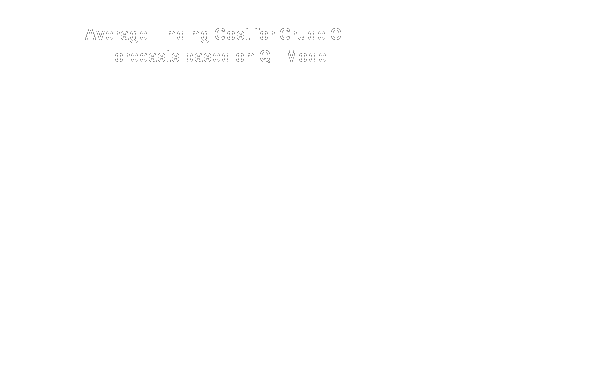
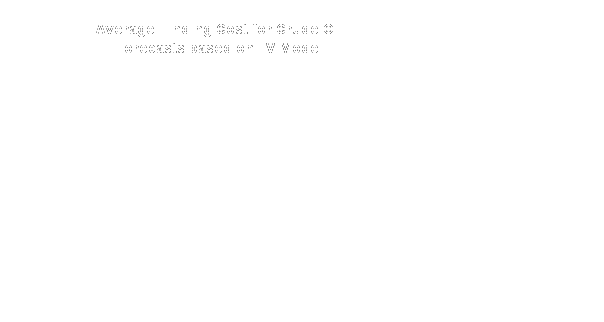
Figures 8A and 8B:
Crude Oil: Technology Varieties Model
1. Epple (1975, pp. 63-65; see especially equation 5-4) shows that, more generally, the theory predicts that
price minus marginal cost rises at the rate of interest.
2. Our analysis considers only reserve additions of nonassociated gas (i.e., gas not occurring in association
with oil) to avoid the problem of joint costs.
Proved reserves are, by definition, the portion of the identifiable resource base that can be
economically extracted using current technology.
4. Survey evidence suggests that firms in the majority of R&D-intensive industries view patents as
relatively ineffective in "capturing and protecting the competitive advantages of new and improved production
processes." (Levin (1986)).
5. For example, computer technologies that precipitated the development of 3-D seismic--a technique that
reveals more about subsurface geology and potential hydrocarbon reservoirs--has probably had a relatively greater
impact on productivity than other, smaller developments. Improved seismic techniques steer firms toward drilling in
areas with a higher probability of containing petroleum and away from more risky investments that might have been
made had advanced technology been unavailable. Other technological developments also reduce costs, but at a
later, less risky stage in the finding process.
6. Exploration gravity measurements are a method for detecting the local variations in the earth's general
gravitational field produced by the subsurface geology. The composition of rocks affects the gravitational field, i.e.,
the less compact the rock, the less its effect. Variations or anomalies are contoured on a map and provide evidence
of geologic structures such as faults or other reservoir traps.
8. The results for the 1970-1990 period, which for data availability reasons is used in estimating cost
functions in Section III, are very similar 11. In the non-resource literature on cost and/or production functions, a similar variable is often used to
capture the "learning-by-doing" or "learning curve" effect. Thus, one might want to think of the cumulative past
output variable in (2) as picking up the net impact of two separate effects: (i) the "resource depletion" effect,
which should impact output negatively, and (ii) the "learning curve" effect, which should impact output positively.(12)
12. /On the former, see Pindyck (1978); on the latter, Berndt (1991, Ch. 3).
13. This specification embodies the expectation that reserves will be discovered in order of their quality and
ease of accessibility.
14. See Grossman and Helpman (1991, Chapters 3 and 4).
15. Although this assumption is standard in theoretical work, it appears hard to defend (except for the
absence of workable alternatives) when one looks at the heterogeneity of actual technological diffusions.
16. Following Uhler (1979), total exploratory drilling costs are divided by footage drilled to get the unit cost
of drilling pDt ; total G&G expenditures are divided by crew-months of G&G activity to get pGt .
18. The estimation period is unfortunately limited because reserve additions data prior to 1966 do not
disaggregate reserve "revisions" from the other components of reserve additions. Revisions and 'extensions' are
lumped together. While to some extent revisions reflect information gained through development drilling, they also
reflect, in large part, a reassessment of the economic viability of already discovered reserves as market prices
change. This component of revisions does not reflect "output" from the E&D process and supports the notion that
reserve revisions should be excluded from the remaining components of reserve additions, as is done for the post
1966 data we use (see Appendix II).
19. Natural gas wellhead prices in the U.S. were regulated from 1954 through the early 1990s. The Natural
Gas Policy Act (NGPA) of 1978, which was in effect through 1984, put into place a new regime of price controls
that provided incentives for drilling for deep, expensive gas. Increased drilling activity resulted, which presumably
put upward pressure on factor costs (e.g. rental rates on drilling rigs increased). In principle, cost functions can be
estimated -- as we do in this paper -- even when output prices are controlled. The activity variable in the cost
function picks up possible (dis)economies of scale, while the producer price index captures changes in factor costs.
There is a potential problem, however, to the extent that controls alter the optimal mix of outputs (e.g. deep vs.
shallow gas). Models in Table 2 were also estimated including a level-shift dummy for the 1978-84 period. The
dummy, however, was statistically insignificant.
20. A reviewer argued that "oil and gas prices would seem nature candidates for instruments since they
influence E&D efforts, but there would likely be very little reverse effect since reserve additions in a given year are
sufficiently modest relative to the existing stock that they will likely have little contemporaneous effect on price."
Incidently, the same argument applies to the endogeneity of technology resulting from the adoption of new
techniques.
26. There are opposing effects. Without technological improvements, the average finding cost curve would
undoubtedly shift upward, tending to cause the profit-maximizing 'supply' of reserve additions each period to fall.
On the other hand, without technology the probability of actually finding additional reserves when E&D activity is
undertaken will be lower. Thus, without technological improvements the 'demand' for reserves by firms upstream
in the petrochemical industry, say, will be higher. A priori, either effect could dominate. Thus, actual reserve
additions may rise or fall in the counter-factual "no tech. change" scenario relative to the historical series.
34. These are standard categories for petroleum (i.e., crude oil, associated and nonassociated natural gas)
reserve additions used by API, AGA and EIA.
35. Revisions through improved recovery are likely to be small for nonassociated natural gas. Most
improved recovery programs are directed at crude oil.
36. Net revisions may actually lag changes in demand by one year.
37. Overhead and the remainder of non-land acquisition and non-improved recovery expenditures are
allocated proportionately to drilling and G&G.