Comments welcome
THE INTERNALIZATION OF EXPORT CHANNELS
AND THE EXPORT ACTIVITY OF SPANISH MANUFACTURERS*
Fernando Merino
Universidad de Alcalá
Fundación Empresa Pública
Vicente Salas
Universidad de Zaragoza
(February 1998)
Abstract
In this paper, we analyze the existence of firm owned export channels as a response to the firm's specificities. The different theories justifying the internalization of such channels have shown, as well, that the larger the amount of exports the more likely the firm will establish its own export channels. As the existence of such channels can promote export activity, the econometric approach deals with the possible simultaneity, taking into account the binary character in the variable which refers to the internalization of the export activity.
Keywords: export channels, exports, internalization, simultaneity.
JEL Classification: F23, L10
Address for correspondence:
Fernando Merino
Fundación Empresa Pública
Plaza Marqués de Salamanca, 8
E-28006 Madrid (Spain)
Phone: +34-1-5777945
Fax: +34-1-5755641
e-mail: fernando.merino@u.alcala.es
* This research has been partially funded by the project CICYT SEC97-1368
1.- INTRODUCTION
Throughout the eighties (and early nineties) Spanish exports increased dramatically in response to a large set of factors (from the integration in the, then, EEC, to a macroeconomic recession situation from 1989 until the early nineties). Such an increase in export activity has generally been considered to have a permanent character and the traditional "residual export" explanation no longer holds. This increase in the export activity has been accompanied by important cases of firms internationalization, including production abroad, which was something unusual in the Spanish case until then.
The studies of what can be considered the first stages of the internationalization process in the activities of a firm (selling its output in markets other than the one where it was produced) have pointed out the importance of the means that firms employ to export. Basically, it can be said that firms must face the question of the degree of control and involvement in such channels, determining whether to establish such activity by itself, or whether to transfer this activity externally. In fact, these two choices are not seen as alternatives because firms can employ both of them. In other words, when a firm establishes its own export channels, this means a step further in the internationalization process because it implies a greater commitment in the export activity. When exports have a residual character, or are an alternative in adverse periods in the domestic market, and so on, it is not expected to establish an integrated distributors network.
This paper is focused focused on the relationship between the existence of firm owned export and the production firms export. Several (theoretical and empirical) works have studied the influence of the volume of exports over the ownership of the (foreign) distribution channels. According to the Transaction Costs Theory, for example, the larger the level of exports, the more likely is that this activity will be internalized. On the other hand, some studies have remarked that owning the export channels can fuel the exports, in so far as the output characteristics will be better transmitted, the service to the client may improve, etc. At this point, some public policies were implemented in order to give greater facilities to firms for the establishment of their own export channels.
Most of those studies lack on taking into consideration the possible simultaneity in the determination of the amount exported and the export channels. If this simultaneity is taken into account, it might be revealed whether the larger export intensities observed among those firms which internalize the export activity, is due to this fact, or in the other hand, whether they internalize the export activity because their export figures are large. In order to take this possibility into consideration, it is necessary to take into account the two relations simultaneously. This implies dealing with a simultaneous equations system in the econometric treatment. The econometric technique developed in Blundell and Smith (1994) has been employed because the existence of owned channels is evaluated by a binary variable, and it is this observed variable that will be related to the amount of exports. As can be seen, there are clear implications from the results for providing a more accurate and econometrically consistent estimation of the link between the existence of export channels and the amount a firm exports.
This paper is organized in the following way. First, section 2 presents some of the theoretical studies that have dealt with internalization of export activities and its link with some approaches to firm internationalization. In section 3, there is a detailed explanation of the Blundell and Smith (1994) technique to estimate the relations between these variables. The next two sections contain the main contribution of the paper: the Fourth analyses descriptively the Spanish firms and the Fifth explains the results of the econometric estimation. Finally, section 6 contains the concluding remarks.
2.- EXPORT CHANNELS AND FIRM-INTERNATIONALIZATION
International Economics is a branch of Economics with a long tradition, which has been mainly focused on international trade and capital movements from the perspective of the countries. More recently, an extensive literature has studied the international economic activities from the firm perspective, dealing with exports at firm levels, multinationals, their characteristics, etc. The literature reviewed in this section is included in the second line in which the key aspect is the firm and not the country. Given the purpose of this paper, the literature concerning the following two aspects is specially surveyed: on the one hand the decisions concerning internal or external procurement of export channels and on the other the export behaviour of firms.
a) Export channels
In the value-added chain of the firms, once the good is finished, the next step consists in selling it, with the required activities of marketing, distribution, and so on, until this item is available for the customers. These activities can be carried out by the firm, if it disposes of its own sales channels, or by means of external agents such as independent distributors, dealers, etc.
The internalization of this activity has been studied from the perspective of vertical integration in the firm. The relationships between the principal and the agent justify these possibilities (see, for example the models referred in Kotler, Lilien and Moorthy (1982) or Tirole (1989)). When the output is sold in countries other than the one where it was manufactured (that is, it is exported), the internalization of the sales activity can be considered as a part of a process where the firm is becoming an international entity with activities in different countries.
Different theories such as Export Stage models (see, for example, Johanson and Wiedersheim-Paul (1975), Johanson and Vahlne (1977), Dunning (1993) among others) view the internalization of the foreign sales activity as one of the first stages in the internationalization process of a firm. From a situation of a firm whose whole activity (production, purchasing of inputs and selling the output) is in a single country, to the situation of producing and purchasing resources in different countries, taking advantage of their differences, and selling wherever it is more profitable, there are several intermediate stages. These stages, such as for example exporting its production to third markets, getting involved itself in those markets in different ways, etc. imply different degrees of international involvement.
For the case of exports, the aspects affecting the vertical integration of the foreign sales activity, the choice between internalization or arms-length market transactions, can be analyzed with the help of the theoretical developments that explain the internationalization because the existence of owned channels is seen as a first stage in the internationalization processes. The justification to such processes is based in the well known eclectic paradigm of internationalization developed by Dunning (1979). He highlights the advantages of ownership, localization, and internalization as explaining factors for them.
Furthermore, several theoretical approaches of firms' internationalization are based on the principles indicated by the Transaction Costs Theory. Hymer (1960) remarked that to operate abroad is not only an investment, but that it also implies maintaining the ownership of these resources and the capability to manage them. Then Transaction Costs Theory can provide an explanation to this process. This theory, formulated by Williamson (1975, 1985), Riordan and and Williamson (1985), holds that the more specificities there are in a transaction between two agents, the more likely it is that one of them will internalize it, in order to minimize the costs linked to that transaction (which includes monitoring, settling contracts to avoid opportunistic behaviour, and so on).
Transaction Costs Theory focuses on the transaction as the main unit of the analysis. A transaction implies a series of costs with which the agent must deal. One of the possibilities of avoiding them is by internalizing this transaction, this is, one of the sides will be in charge of the two activities and, as there will be no transaction between agents, these costs will disappear. But internalizing the transaction implies a different kind of cost, which the firm will have to consider. According to Transaction Costs Theory, the difference in the costs between external (or market) procurement and internal procurement costs determines the option. Williamson holds that the difference between these two alternatives depends on the asset specificity.
Although the high-powered incentives of markets (for example, by restraining bureaucratic distortions, displacing the less efficient agents, and so on) favour tighter production cost control, they impede the ease of adaptation as the bilateral dependency of the relation between the parties builds up. This effect is, according to Williamson, a consequence of the fundamental transformation that occurs as a condition of asset specificity deepens. Thus, market procurement is the preferred supply mode when asset specificity is slight, while internal organization is favoured when asset specificity is great. Figure 1 shows this difference of (governance) costs between the case when this activity is provided externally to the firm and when they are provided internally by the proper firm. As can be seen, this difference switches in favour of internal organization when the degree of specificity reaches the threshold k*.
(Figure 1)
In addition to governance costs, Williamson deals with the production costs in these two procurement choices. Expressing this cost difference as a function of asset specificity, it will be in favour of a market procurement given that the market can add up the output of different producers taking advantage of scale economies. It can be plausibly assumed to be a decreasing function of asset specificity, as it is displayed in Figure 2.
(Figure 2)
As Williamson indicates, the objective is not to minimize any of the differences of costs taken separately, but to minimize the sum of production and governance costs until the optimal (or specified) level of asset specificity is reached. In Figure 3 the vertical sum of those costs is displayed, showing that there is a threshold k** > k* which determines that the optimal procurement procedure moves from the external (if k < k**) to the internal mode (if k > k**).
(Figure 3)
When the question is what mean should be used to commercialize the exports, the Transaction Costs Theory can be applied to the determinants of the choice between an independent agent or having distributors and staff in the proper firm to develop this activity (empirical studies as Osborne (1996), Klein, Frazier and Roth (1990) or Dwyer and Oh (1988) have followed this line of research). According to the basic Transaction Cost Theory conclusions, those firms with more specificities will tend to internalize this activity. Some theories which do not depart from the transaction as the unit to study, but to the firm as a whole (as the resources and capabilities approach), also pay attention to the specificities of the firm in order to determine the choice to export.
To identify and test the importance of different sources of the specificities a company can introduce in its production, has given rise to different studies about the existence of owned channels to export. This specificities can be included as ownership or location factors according to Dunning's eclectic paradigm which explains firms' internationalization.
The need to adapt products to customer specifications and the commitment by the firm to export activities have been recognized as ownership advantage factors, such as intangible assets provided by asset specificity in the firm. Asset specificity in a firm may be a consequence of different sources. R&D activities will introduce, in so far as they are fruitful, distinctions in the firm's output from the competitors'. Furthermore, the innovations introduced as a result of R&D need to be protected from competitors in order to avoid imitation that will reduce the possibility of extract rents from them; and, internalizing the international distribution will reduce the risk of being copied. Horizontal differentiation, a consequence of advertisement, is another classical source of specificity which will differentiate one product from the competitors'. In order to obtain greater effectiveness of their advertising, firms which heavily advertise their output will tend to have their own channels.
The environment of a firm activity and its markets, its uncertainty and volatility are elements that have also been considered in this perspective as conditioners of the internalization of export channels. Uncertainty based on volatility should lead to high transaction costs because of the possibility of being caught by surprise by external agents (see Keegan 1986). This proposition has justified the consideration of country-specific differences, which may be included in the localization advantages for firm internationalization (in this case towards a specific country or region) proposed in Dunning's eclectic paradigm as well as the diversity. This is due to the fact that when the differences (cultural, taste, political, ... ) are vast, the costs of adapting the firm to those peculiarities increase, making (relatively) smaller the costs of using external agents.
In the analysis of vertical integration, the possibility to get scale economies requires taking into consideration the total output of the firm. As in this case, we are dealing with the foreign distributional activities where the scale economies will be in relation to the amount of exports. The firm may reach, by itself, more scale economies due to the larger amount exported, then the advantage of the market (as a mean to add the output of different firms to take profit of scale economies) reduces. This fact shows, in terms of the aforementioned general overview of Transaction Costs Theory, that the schedule of the production cost difference will move downwards. Williamson also states that the effect of the size upon the final decision may be stressed due to the fact that some organizational structures capable of reducing bureaucratic costs will be profitable depending on the size. If these possibilities are available, the schedule of governance costs will also move downwards. Then, ceteris paribus, the size will affect the firm decision moving downwards the total cost schedule, and the internal procurement becomes the optimal choice for firms whose degree of specificity lays in the interval [k', k**].
(Figure 4)
This possibility implies that the volume of exports (actually, its persistence over time will be an important factor as well) is a relevant variable in order to explain the internalization of the export distribution. Those firms whose exports are a marginal figure, or that are not continually done over time, will hardly be able to get the benefits of integrated channels even if their products have specificities.
b) Firm exports
The classical international trade theories have focused on differences in factor proportions to explain international trade among countries. These differences would provide the theoretical basis for a situation where different goods are produced in different countries. Therefore international trade is justified as the mean to make available every good to the consumers, wherever they are located.
The majority of recent theoretical studies of the export behaviour is in consonance with the current trends of international trade, where intra industry trade among industrialized countries is the most important kind of trade. The main explanations (see, for example, Krugman (1979) and 1980) or Helpman (1981)) lie in the possibility of achieving scale economies by the firms (size becomes one of the key variables to be studied) and facing a differentiated demand from consumers (the product differentiation should therefore be considered an explanatory variable).
From this perspective, some implications for the firm's behaviour have been raised. The elements which may contribute to differentiate the output of one firm from the others are considered as an explanation of exports at firm level. As the degree of differentiation of the output is one of the key elements to explain firm exports, how this differentiation is perceived by the (potential) clients becomes a crucial point. Those firms which dispose of their own network to contact the clients, to know their requirements and tastes, to attend the orders by itself (transmitting better the firm way of doing), and so on, may reach, ceteris paribus, larger sales in those markets, increasing its exports. Additionally, different models have stressed that double marginalization, moral hazard, and so on, justifies that firms which do not integrate retailing activities will have smaller sales than those ones which integrate them.
Summing up, this framework provides the theoretical reference to study the links between export activity and internalization of the export activity which can be condensed as:
CHANNEL = f1 (Exports, specificities)
[1]
EXPORT = f2 (Channel, size, product differentiation)
As it has been pointed out, there are different empirical studies of the first relationship (Lilien (1979), Klein, Frazier and Roth (1990), Anderson and Coughlan (1987), ...) concluding that specificities and the amount of output are positively related to the integration of channels in the firm. For the second, the evidence concerning the influence of channels on the export figure is scarce (for Spain some results can be seen in Alonso and Donoso (1994) in a descriptive perspective). Yamawaki (1992) sets out a two equation system with the exports and the size of the distribution subsidiaries of Japanese companies in U.S.A. taking into consideration the possible simultaneity between both of them; and the paper concludes that the amount of export does not influence the size of the distribution subsidiaries.
3.- ECONOMETRIC PROCEDURE
In accordance with the propositions reviewed in section two, the links between the two variables, channel and export, determine a simultaneous equation system in which one of the variables has a binary character. Then, the system can be expressed as follows:
[1.1]
[1.2] 
Where  and
and  are vectors of k1 and k2 variables independently distributed of the error terms u1 and u2. These u1 and u2 are supposed to be jointly normally distributed ,with mean zero and a positive definite variance matrix S
= [ s
]. Additionally, d
+ a
1 a
2 = 0 is required in order to have coherency in the system above (this is, the latent variable
are vectors of k1 and k2 variables independently distributed of the error terms u1 and u2. These u1 and u2 are supposed to be jointly normally distributed ,with mean zero and a positive definite variance matrix S
= [ s
]. Additionally, d
+ a
1 a
2 = 0 is required in order to have coherency in the system above (this is, the latent variable  does not depend on the observed variable y1 when
  is substituted in equation [1.1] ). In this system, the variable y1 captures the existence of export channels (1 if the firm owns them, 0 otherwise) and the amount exported; moreover, the system allows for some kind of possible simultaneity between the dependent variables together with their relationship with the two sets of explanatory variables (
 and
and  ).
).
One of the peculiarities of the system [1] is that one of the dependent variables (y1 ) is observed in a binary form, then the usual approach to simultaneous equations (Two Step Least Squares) will not provide the consistent estimations required. Besides, it must be noted that the variable considered as explanatory in the equation with the variable observed continuously [1.2] is not the latent variable (the one linearly linked to the covariates) but the one actually observed: y1 (the binary variable). The rationale for this point is that in the problem we are dealing with, the influence on export activity is not because of the latent variable (which evaluates the difference between the costs with and without firm-owned export channels), but the actual situation of the firm (having or not its own export channels). This implies that the common classical approaches to simultaneous equations with limited dependent variables (as Nelson-Olsen, Amemiya, etc.) do not fit in this problem either.
Given that we are interested in estimating the relationship between the existence of owned channels to carry on the export activity and the intensity of such activity, the sample was reduced to the subset of exporting companies. To consider this subset for the estimation of the system [1] will not introduce any sample selection bias, because the relevant sample in this problem is the one constituted by the firms with export activities, then none of the problems due to endogenous selection may arise.
Blundell and Smith (1994) suggest that in order to estimate the system, [1.1] should be re-written conditionally on u2 as

given that u1 = r u2 + e 1 and the fact that e 1 = u1 - r u2 and u2 are independently distributed.
Notice that  is independent of e
1 , then the former equation can be expressed
is independent of e
1 , then the former equation can be expressed

In order to estimate this equation, suitable estimators of  and u2 are required. They can be simply obtained from [1.2] and estimations of a
2 and g
2. This method proposes to estimate a
2 and g
2 by Instrumental Variables using X (all the variables included in X1 and X2 ) as instruments, because it provides consistent estimations of them (see Blundell and Smith (1994) for a proof). With these estimators,
and u2 are required. They can be simply obtained from [1.2] and estimations of a
2 and g
2. This method proposes to estimate a
2 and g
2 by Instrumental Variables using X (all the variables included in X1 and X2 ) as instruments, because it provides consistent estimations of them (see Blundell and Smith (1994) for a proof). With these estimators,  and
and  , it is possible to compute
  and
and  ; then [1.1] becomes:

where 
Blundell and Smith (1994) prove that a ML-estimation of this equation (which supposes a Probit model given the binary character of the dependent variable if a normal distribution is assumed for the error term) subject to the coherency condition d
+ a
1 a
2 = 0 (this is  ) is econometrically consistent, providing the basis for the econometric approach to this problem.
Following the idea suggested in Blundell and Smith (1986) for the estimation of a system of simultaneous equations where one of the dependent variables is truncated (tobit-type), a test of exogeneity can be obtained in the empirical estimation of the equation with the limited dependent variable. These authors show the estimated coefficient of , r
, is an asymptotically optimal test for weak exogeneity.
4.- DATA AND VARIABLES
4.1.-The data source
The data used to study the existence of owned channels among Spanish manufacturers in this paper, are provided by the Survey on Business Strategies, SBS (Encuesta Sobre Estrategias Empresariales, ESEE). This survey is carried out yearly by the Spanish Ministry of Industry. A panel of about 2,000 Spanish manufacturers from the different activity sectors are surveyed every year in different subjects such as technological activities, staff, export activities, markets, costs, prices, and so on.
This statistical source presents several advantages for the study of the question posed in the paper, for example the fact that the sample covers the whole manufacturing industry with statistical representativeness, and that a panel of time series and cross-section data is available. Other databases of Spanish firms do not share those attributes.
The theoretical framework suggests that the sources of specificities in the output may promote both internalization of export channels and firm exports. As the econometric procedure described in section 2 indicates, a different set of explanatory variables is required in the two equations in order to have instruments for the estimations. Although in some cases the same variables could be used in any, or both, of the equations (as in horizontal differentiation), we chose two different proxies in order to dispose of a larger set of additional instruments.
From the SBS sample, the information about the existence of owned channels in the firm is measured by the binary variable CHANNEL which takes the value 1 for those firms which have such channels. When firms are surveyed, this information is collected by a highly specific question requiring information about the existence of owned-channels as brokers network, delegations, subsidiaries or branches. About this topic firms are also questioned whether they employ parent-companies (in the case of foreign-owned companies), dealers or other means to export. The existence of owned channels, as they are identified, does not at all imply its exclusivity as a mean to export; but the point of interest in the study is the influence on the export figure of its existence.
The set of explanatory variables for the existence of export channels includes the ones commonly employed in the empirical studies of this question. These variables refer different specificities and also, when they are available, the ones that capture the need of having a close contact with the (potential) client or the need of getting information from the clients' requirements.
The technological specificities a firm can include in its output are proxied by a set of variables including the annual expenditures in R&D and technological royalties, normalized by the sales figure, in percentage. The use of the number of patents registered in Spain during the year constitutes a possible alternative. Due to the fact that not every innovation is patented, and the amount of patents registered in previous years is not available, the R&D expenditure becomes a more appropriate proxy. As a limitation, it must be noticed that the number of patents may not be comprehensive of every innovation the firm has; some of them could not be registered for different reasons. This would not be a problem if this difference were maintained in similar levels across the sample. Griliches (1980) reports larger patents/R&D expenditures ratios for small firms, which he tentatively attributes to (further the possibility of sample selection bias in the empirical study) the fact that larger firms do not depend as much on current patenting for their viability or the protection of its market position. Thus, even at equal underlying true inventiveness ratios, the propensity to patent may be lower for large firms. Furthermore, this difference can also be observed across industries.
Another source of differentiation which may affect the decision of internalize the export channels is the firm's reputation. Those firms which promote their brands will probably prefer to have their own channels in order to get a better control of this activity. In this way they will avoid third agents damage this image. To capture this effect the dummy variable BRAND (with the value 1 for those firms which promote their brand and 0 otherwise) has been included as explanatory.
The variable SERV takes the value 1 for those firms providing auxiliary services (maintenance, post-sales services, ...) and 0 otherwise (because they are not provided, or because other firms do it). As an owned channel will facilitate to provide those services, the firm's image will be better protected, etc. as Etgar (1978) and Keegan (1986) suggest, a positive sign over the existence of channels in the firms is expected.
EQUAL takes the value 1 in firms whose output is equal for every client, and 0 when it is adapted for each one. As the export channels can also be a mean to collect information about tastes, requirements and so on, it will be less costly for a local (and then, external) firm to do this task; then when output is adapted for every client, an external agent may be preferred. But, at the same time, tailor made items may include more specificities, doing more adequate the use of internal channels. Then, there is no clearly expected sign for this variable.
Finally, SIZE measures the size of the firm by the number of employees, to capture any additional size effects that could facilitate the existence of firm export channels due, for example, to an easier access to financial resources. In order to allow a non-linear effect of this variable its squared value was also included.
Given the availability of data, the closest variable to what can be considered as a location factor (in Dunning’s classification) is related to the possible dissimilarities in buyers' tastes. Those manufacturers whose output is not for final consumers, will face less the (possible) dissimilarities among clients in the different countries where its output is sold. From the Spanish input-output tables, industries (on a 3-digit basis) can be classified as consumer or producer oriented according to the main destination of the product. The variable CONSUM takes the value 1 for those firms whose main good is classified in a consumer-oriented industry and 0 otherwise. In so far as firms whose main good is directed towards final consumers the need to transmit the specificities can be larger, a positive sign would be expected in the estimation.
The second relationship in the system links the exports figure with the existence of channels to export in the firm and the set of covariates. This set includes different variables to capture technological and advertisement based specificities. The export and sales figures collected in the variables EXPORT and SALES respectively refer to the current year and are measured in thousands of Spanish pesetas.
One of the typical sources of product differentiation considered in empirical studies of exports are the technological activities. The R&D expenditures over sales is the variable considered to proxy this kind of differentiation, as in the first relationship, and again a positive sign is expected in the coefficient of this variable.
The advertisement/sales ratio (ADVERT) is used to collect the horizontal differentiation. As the advertisement in those items focused to the final consumer and those ones to other firms could be different, the advertisement/sales ratio is differentiated for firms whose output is for final consumers (ADV-CON) and for those ones that it is not (ADV-NCON). It must be noted that this information refers to the whole company activity, and that it is not possible to distinguish to what extent it affects its activity in foreign markets (if it does). Then, although the sign to be expected is positive, the existence of a bias caused on this not completely adequate measure cannot be a priori neglected.
To consider some peculiarities in the firm production, some additional variables were included. Generally, those firms whose output is subjected to (external) normalization and quality controls are more homogeneous and then, less specificities are to be considered. Notwithstanding, the existence of such processes is becoming more and more a requirement in some markets, and the most important factor linked to them is that the good achieves certain quality requirements more than the homogeneity characteristic. Then a positive sign should arise in the variable N.&Q.C. which values 1 in those firms whose output is subjected to these processes.
As a final remark, the need for the econometric estimation of a set of explanatory variables different enough in the two equations to get instruments for the first step, must be stressed. Although in several cases the same variables could be used in the two equations from a theoretical framework consideration, it is necessary to dispose of a large set of covariates for the econometric estimation.
As there may be a different behaviour between domestically-owned firms and foreign-owned firms, a dummy variable (DOMESTIC) has been included in the estimation. There are two main reasons to study the (possibly) different behaviour between domestic and foreign-owned firms. On the one hand, foreign-owned firms may have a special access to sell in foreign markets (because they are owned by non-residents, with the possibility to establish links with the parent-company or its subsidiaries) or to get adequate information about them. On the other hand, this distinction allows to test the differences in the management between these two groups, being the domestic-owned firms the ones traditionally considered with a smaller endowment of managerial capabilities that could result in different internationalization strategies. Actually both of these two reasons could not be distinguished in the empirical study, but the existence of any of them (or both) will be considered.
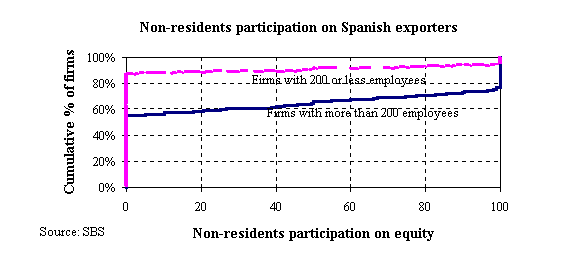
The distinction between the two kinds of firms has been established on the basis of the participation of non-(Spanish)residents in the equity of the firms. Those firms with a participation under 25% have been considered domestically-owned, which allows for a large enough amount of foreign-owned firms in the sample. Besides, it must be remarked that the purpose of this distinction is simply to study a (potentially) different behaviour in those firms with foreign owners, and then the degree of control that non-residents could achieve is not the central point here. In the Figure A1 in the Appendix, the distribution of exporters in the sample according to the participation of non-residents is reported. As can be seen, very few firms in the sample will change its consideration for establishing the threshold at 50%, then it is not surprising there are not significant changes in the conclusions presented in the next sections when those alternative thresholds were considered. The different behaviour could be more complex than just a difference in the value of the latent dependent variable (this is the meaning of a dummy variable in a regression) then, the regressions were also run for the subset of domestically-owned firms.
Another point of interest to know is the differences between large and small and medium firms as far as their capability of access to foreign markets is concerned, and to establish their own export channels. Its interest is due to the importance that SME are gaining in the European economies in the nineties and the existence of different industrial policies specially focused on them. For instance, one of the objectives collected in the Spanish White Paper on Industry is "to promote and facilitate the internalization and access to foreign markets of small and medium enterprises". Then, we have classified firms as large or small-medium on the basis of a threshold of 200 employees, and we also present the results for these subsets. An alternative is to use the amount of sales as indicator to avoid the consequences of different capital-intensities among the firms in the panel. We chose that criterion and threshold to be coherent with the characteristics of the statistic data source which distinguishes the firms at that figure.
4.2.- Some descriptive data
(Figures 5A & 5B)
In order to show the international activities studied in this paper of Spanish manufacturers, figure 5 is presented. As can be seen, the export activity is more common among large firms. A more detailed study of the size-export frequency relation, considering more size classes, confirms this relationship. Labeaga and Martínez-Ros (1994) show the positive relationship between size and export frequency, considering the possible simultaneity between both of them, in consonance with the theories suggested by Schumpeter, Scherer, Waterson and others. Actually, this relationship has long been observed in empirical studies (see Germünden (1991) or Aaby and Slater (1989) for surveys in this topic). One of the main points of interest in this paper is the existence of firm channels to export. The percentages (presented in the first row of Table 1) indicate that about 50% in SME and over 60% of the large firms that export have their own means to do it. The existence of such channels does not imply that the firm directs its whole exports through it; firms can use different channels and with different intensities, but the relevant point is its existence. Furthermore, a detailed study of these variables show that about 10% also employ external dealers. For Spain, the other data source covering the manufacture with this kind of information shows a smaller percentage of firms with their own channels (Alonso and Donoso (1994)).
The main differences across the different sectors can be observed in figure 5. Among firms with 200 or less employees, there is a large percentage of firms which export in the sectors of "Office machinery, data process, precision instruments and so on" (but the percentage of them which have established their own channels to do it is smaller than in other sectors), and in the "miscellaneous". On the other hand, the most important differences for firms with more than 200 employees lay in the small percentage of exporters in the "Drinks" industry and in the fact that all firms in "Leather/fur/footwear" industry are exporters with their own channel. However although the reduced figure of firms (just eight) requires caution when reading this last result.
The main characteristics of those Spanish manufacturers which export (in comparison to those which do not) and of those which have their own export channels are reported in Table 1, in order to present an overview of this set of firms.
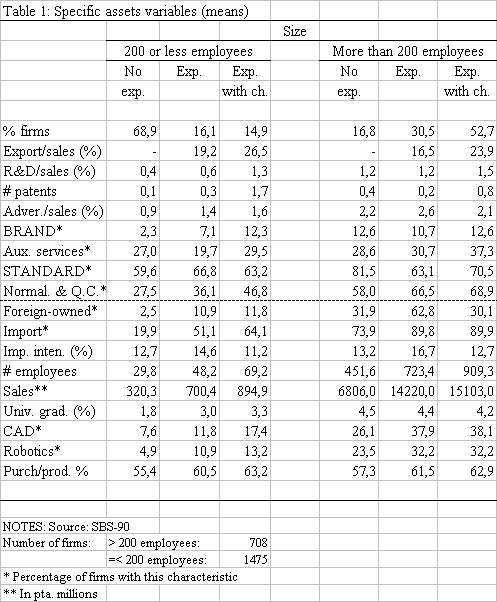
The first interesting result is that the average export/sales ratio is smaller in firms with 200 or less employees than in larger firms. A more detailed study of the relationship between this ratio and the firm size does not conclude in any clear relationship, as has been observed in different studies in the manufacturing industry (Bonnaccorsi (1992) for Italy and Merino and Moreno (1996) for Spain get the same results; for France, Auquier (1980) gets a negative relation; for Germany, Wagner (1995) gets a positive relation). Besides, from a theoretical perspective, Industrial Organization models such as Maravall and Torres (1986) suggest that no clear relation should be expected. The most relevant conclusion from the analysis of this variable is that the export intensity observed in those firms which have their own export channels is clearly greater (7 percentage points in the SME, and 4 in the large ones). This is the first bit of evidence in favour of the influence of the owned channels to achieve a larger export figure. For Spain, Alonso and Donoso (1994) with a different database report the same difference; Bello and Verhage (1989) show that for Dutch companies, the more they export, the more export activities they internalize.
The next set of variables presents different activities of the firm which may be linked to different firm-specificities. The theories mentioned in the previous section suggest that those firms which have a higher degree of specificities will tend to export and to internalize this activity in the same firm. A general overview of Table 1 reveals the results for Spanish manufacturers are in consonance with the predictions of the theory, basically those firms more involved in foreign markets present higher values in the variables measuring specific assets.
Among the firms with 200 or less employees, R&D, advertisement, or the promotion of their own brands are clearly more important in those firms more involved in international activities. The same conclusion can be raised for the existence of quality controls, and auxiliary services. A standard output seems to be less common among those firms that are non-exporters, but there do not seem to be significant differences between those firms with their own export channels.
In large firms (those ones with more than 200 employees) the R&D activities and advertisement are more common in the exporters and even more in the exporters with their own channels. The intensity of these activities does not seem to be linked, in the same way, to the degree of involvement that the firm has in the foreign markets. The other variables considered, the existence of auxiliary services and quality control, are also more common in the exporters with their own network than in the others.
The second panel of Table 1 contains a set of variables to characterize other aspects of Spanish manufacturers. The first three variables (to be foreign-owned, to import, and import intensity) allow us to measure the degree of the implication with non-residents in different aspects. As can be seen, those firms more involved in the foreign markets on their sales side, are also more involved in the international economy on the side of equity participation and their supplies. As was expected, exporters and those with their own network are larger than the rest of the Spanish manufacturers. Advanced technologies (as CAD or robotics) are also more common in exporters, in the same way that staff qualification is in the small and medium size firms. Finally, firms more oriented to the domestic market are more vertically integrated (their intermediate purchases/production ratio is smaller).
5.- ECONOMETRIC RESULTS
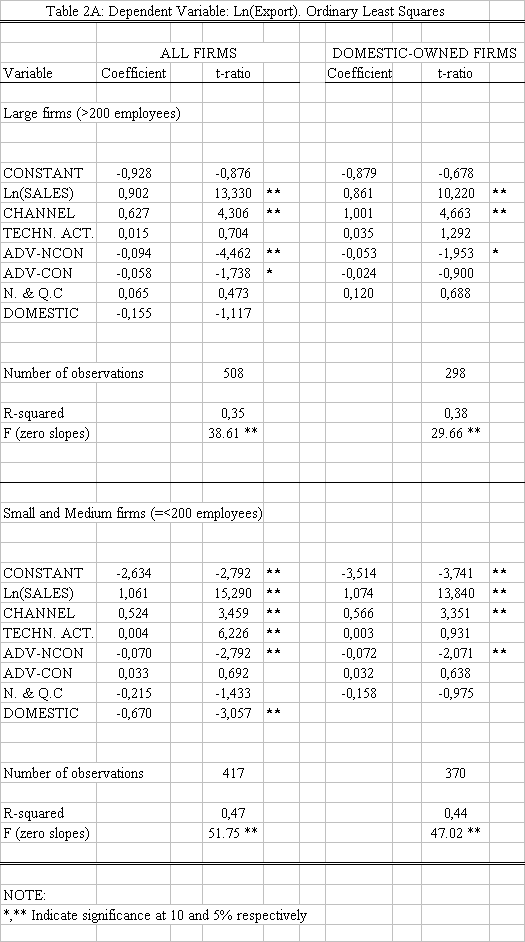
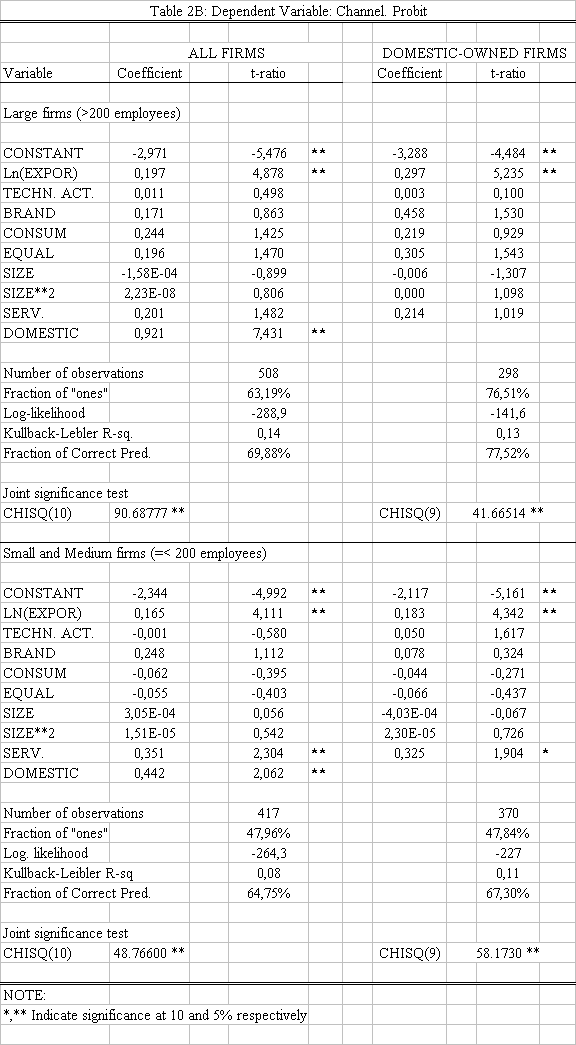
First, in Table 2 we present the results of estimating the two equations independently without considering the possible simultaneity of the dependent variables. This means estimating on the one hand an equation linking the amount of exports with its explanatory variables, one of which is CHANNEL; and, on the other, a binary dependent model for the existence of owned export channels in the firm where one of the covariates is the amount of exports (EXPORT). In order to test the hypothesis of a unitary elasticity of exports to total sales, the logarithms of these two variables were included. Then, if the coefficient of the logarithm of sales is equal to 1 (larger/smaller) a unitary (larger/smaller than one) elasticity can be accepted, meaning that an increase of X% in the firm's shipments is expected to be associated to a (more than/less than) X% increase in the amount exported.
The results of these estimations indicate that the existence of export owned channels in the firm notably increases the amount of exports. Alonso and Donoso (1994) for Spanish exporters get the same conclusion on the basis of comparing the amount of exports between the firms with or without owned export channels. On the other hand, the larger the amount of exports the more likely it is that the firm will have its own export channels in accordance with the propositions suggested, among others by Williamson, Caves, and so on, and observed by Klein, Frazier and Roth (1990) for Canadian exporters, among others.
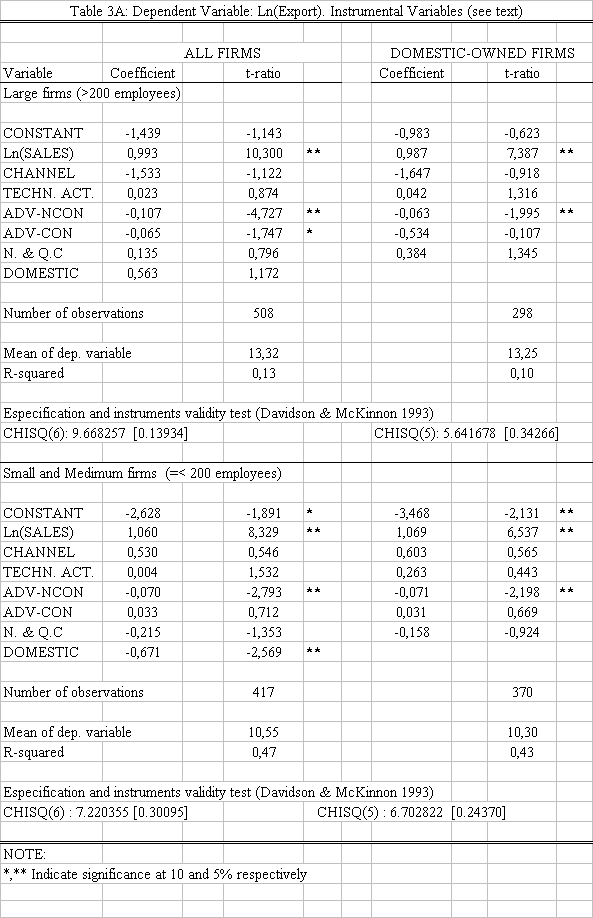
Tables 3A and 3B report the results of the estimation of the equations [1.1] and [1.2] respectively, considering the possible simultaneity between the two variables. It is observed that the results are notoriously different from those presented in Table 2. Besides, as r
(the estimated coefficient of in [1.2]) is significantly different from zero, the null hypothesis of weak exogeneity can be rejected.
The results for the amount of exports' equation, reveal that a unitary elasticity cannot be rejected neither for the whole set of firms nor for the size-based subsets. When the estimation is limited to the domestic-owned firms the same conclusion is obtained.
Considering the possible simultaneity, the existence of owned channels does not have any influence on the export figure (isolated from the effect of the rest of covariates). This result implies that the use of external dealers transmits, in the same way as the firm channels, the output characteristics; and therefore allows the firms to achieve an equivalent amount of exports. This result implies that the larger export values (and export propensities) observed in exporters which have their own channels (even if isolated from the effects of the other variables) is not due to the existence of such channels in the firm, but to the specificities that justify to internalize exports.
The differentiation introduced by the technological activities does not seem to be an element that promotes the export activity. For the Spanish firms, the influence of the R&D activity on exports should not be neglected from this result; Labeaga and Martínez-Ros (1994) show a clear influence on the probability to export, and Merino and Moreno (1996) indicate that firms with R&D technological activities are the ones with the largest growth in their export intensities. Besides, it must be noted that for domestic-owned firms the coefficient of the variable is positive, although only at the 81% level of significance.
The impossibility to know the amount of advertisement done abroad may explain the negative sign (contrary to the hypothesis) for the coefficient of the variable advertisement intensity. If the advertisement expenditures are mainly addressed to the domestic market it is not surprising that firms with larger advertisement expenditures are more focused on the their home market and, then, their exports will be lesser. Notice that the advertisement/sales ratio only has a negative and statistically significant coefficient for firms with sell products not directed towards final consumers.
The existence of normalization and/or quality controls (variable N.&QC) does not have any statistically significant effect on the size of exports of Spanish manufacturers. A positive effect is usually expected; then, this result might reflect that product normalization is required to sell in external and internal markets as well.
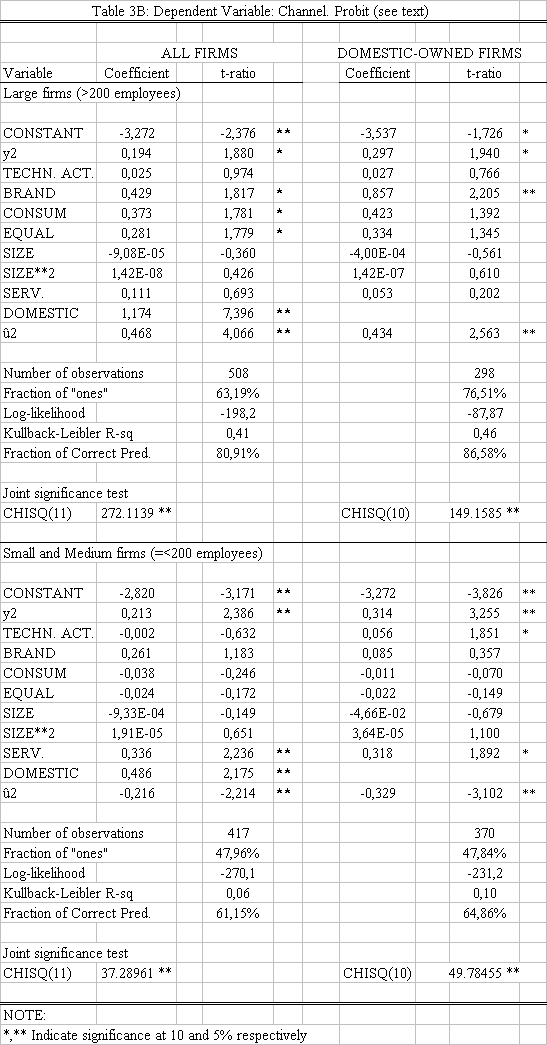
The estimation results of the probit equation, with and  as suggested in Blundell and Smith (1994) are reported in Table 3B. As Blundell and Smith (1986) indicate, the statistical significance of r
in all the subsamples considered allows us to accept the null hypothesis of simultaneity between the two variables considered. This result is in consonance with the conclusion of Yamawaki (1992) which shows that the size of subsidiaries in the US of Japanese firms is jointly determined with the export activity of these firms. Besides, it implies the need to consider this possible simultaneity in future studies of the determinant of export channels and export intensities.
as suggested in Blundell and Smith (1994) are reported in Table 3B. As Blundell and Smith (1986) indicate, the statistical significance of r
in all the subsamples considered allows us to accept the null hypothesis of simultaneity between the two variables considered. This result is in consonance with the conclusion of Yamawaki (1992) which shows that the size of subsidiaries in the US of Japanese firms is jointly determined with the export activity of these firms. Besides, it implies the need to consider this possible simultaneity in future studies of the determinant of export channels and export intensities.
The results show the influence that the amount of export has in the existence of internal export channels in the Spanish firms. They imply that, as expected, the more a firm exports the more likely it will internalize the distributional activities. As was indicated, for example Williamson (1985), this can be due to the existence of scale economies in the distributional activities.
Campa and Guillén (1996) conclude that export intensity does not have any influence on the existence of owned channels, but without distinguishing according to size or paying attention to the possible simultaneity between these variables. Bello and Verhage (1989) conclude that exports are negatively related to some of the export activities provided by the external distributors of Dutch firms. Yamawaki (1992) with a sample of Japanese firms with affiliates in the US (which are supposed to be large) get also a positive coefficient although it is not statistically significant. Klein, Frazier and Roth (1990), with a sample of Canadian firms, get a positive effect on the internalization of distribution channels although, again, without considering the simultaneity between these variables.
The distinction between domestic-owned and foreign-owned firms is relevant. First, in the estimations with all the firms the dummy variable DOMESTIC has a positive coefficient. This coefficient indicates a larger propensity among the domestic-owned firms to establish their own export network. The existence of alternatives such as the use of the parent-company or its resources (other affiliates, its marketing network, ...) may explain this result, in so far as these alternatives operate as a substitute for owned channels providing the same kind of services as them. Alternatively, this result could be showing a higher propensity to carry on an internationalization process by domestic-owned firms than by foreign owned ones, due, basically to the fact that while domestic-owned firms may have a different strategy, considering foreign markets as a place to grow and profit its resources, non-domestic owned firms could be less interested in it, given they are integrated in an international group.
Technological activities are one factor positively associated to the existence of owned channels to export, specially for domestic-owned and SME. This result, suggested by the Transaction Costs Theory, has been obtained in several empirical studies. It indicates that for those firms whose output is more complex, their specificities are better transmitted by means of their own export network than by external distributors.
The existence of export channels is not related to the firm size, beyond the amount of export, as the non statistically significant coefficients of SIZE and SIZE2 indicates. Then, the lesser frequency of firms (Table 1) with export channels among SME is not due to their size, but to the smaller amount of exports which is not enough to justify the internalization.
Finally, those SME that provide also auxiliary services tend to carry on the export activity by themselves, probably because these activities are jointly developed by that network. Accordingly to the interpretation based on specificities, an output designed for every client promotes the internalization among large firms. The kind of specificities linked to a consumer good or the fact that a brand is promoted, are not significantly linked to the existence of export channels in the firms (with the exception of a brand promoted in the large firms).
6.- CONCLUDING REMARKS
In this paper, we have dealt with the internalization of the export activities by means of the owned channels to export in Spanish manufacturers. The Transaction Costs Theory suggests that it will depend on specificities of the firm assets in so far as they are incorporated to the produced goods. These export channels can increase exports because of a better presentation of the product characteristics to the final clients. Different empirical studies have focused on these two relationships (influence of the owned channels on exports, and of the export amount on the existence of such owned channels) but most of them have dealt with both of the relationships independently.
The purpose of this paper is to analyze the relation of these two variables, with emphasis to their possible simultaneity. Given that the existence of owned channels is a binary variable, the system of equations requires a specific econometric approach.
Using a representative sample of Spanish manufacturers, the main results indicate that the existence of export channels does not promote exports (when the effect of other variables is isolated). We also find a unitary elasticity on export over sales (in the observed range) with means that, for those firms with exporting activity, the size of exports increases proportionally with the size of the firm. . The technological assets do not seem to be related to the amount of exports, and the advertisement related strategies appear with a negative sign. Other characteristics such as client-adaptation, number of products, and auxiliary services do not have any significant effect either.
On the other hand, the amount of exports is an element which leads to the internalization of export activity in each of the size-based subsets although a size-effect seems to be present. The technological activities seem to be linked to the existence of export channels, and variables such as advertisement, client-adaptation of the output, kind of good, do not have any significant influence on this strategy.
REFERENCES
AABY, N. E. and SLATER S.F. (1989): "Management Influence on Export Performance: A Review of the Empirical Literature 1978-1988" in International Marketing Review, volume 6, number 4, pages 7-22.
ALONSO, JOSÉ A. and DONOSO, VICENTE (1994): "Competitividad de la empresa exportadora española", Ed. ICEX, Madrid.
ANDERSON, ERIN and COUGHLAN, ANNE T. (1987): "International Market Entry and Expansion via Independent or Integrated Channels of Distribution" in Journal of Marketing, volume 51, February, pages 71-82.
AUQUIER, A. (1980): "Size of Firms, Exporting Behaviour and Structure of French Industry" in Journal of Industrial Economics, December, pages 203-218.
BELLO, DANIEL C. and VERHAGE, BRONISLAW J. (1989): "Performing Export Tasks in Industrial Channels of Distribution" in European Journal of Marketing, volume 23,2, pages 68-78.
BERGSTEN, FRED C., HORST, THOMAS and MORAN, THEODORE H. (1978): "American Multinationals and American Interests", Ed. Brookings Institution, Washington D.C. (USA)
BLUNDELL, RICHARD and SMITH, RICHARD J. (1986): "An exogeneity test for a simultaneous equation tobit model with an application to labor supply" in Econometrica, volume 54, number 3, pages 679-685.
BLUNDELL, RICHARD and SMITH, RICHARD J. (1994): "Coherency and estimation in simultaneous models with censored or qualitative dependent variables" in Journal of Econometrics, volume 64, pages 355-373.
BONNACCORSI, A. (1992): "On the relationship between Firm Size and Export Intensity" in Journal of International Business Studies, Fourth Quarter, pages 605-635.
CAMPA, JOSÉ MANUEL and GUILLÉN, MAURO (1996): "Evolución y determinantes de la inversión directa en el extranjero por empresas españolas" in Papeles de Economía Española, number 66, pages 235-247.
DWYER, F. ROBERT and OH, SEJO (1988): "A Transaction Cost Perspective on Vertical Contractual Structure and Interchannel Competitive Strategies", in Journal of Marketing, volume 52, pages 21-34.
DUNNING, JOHN H. (1979): "Explaining changing patterns of international production: in defence of the eclectic theory" in Oxford Bulletin of Economics and Statistics, volume 41, number 4, November, pages 269-295.
DUNNING, JOHN H. (1993): "Multinational Enterprises and the Global Economy", Ed. Addison-Wesley Publishing Company, Wokingham, England.
DUNNING, JOHN H. (1995): "Reappraising the eclectic paradigm in a age of alliance capitalism" in Journal of International Business Studies, third quarter, pages 461-485.
ETGAR, MICHAEL (1978): "The effects of Forward Vertical Integration on Service Performance of a Distributive Industry" in Journal of Industrial Economics, volume 26, March, pages 249-255.
GERMÜNDEN (1991): "Success Factors of Export Marketing: A Meta-analytic Critique of the Empirical Studies" in S.J. Paliwoda (ed.): New Perspectives on International Marketing, Ed. Routledge, London.
GRILICHES, ZVI (1980): "Patent statistics as Economic Indicators: A Survey", in Journal of Economic Literature, vol. XXVIII, number 4, pages 1661-1707.
HELPMAN, ELHANAN (1981): "International trade in the presence of product differentiation, economies of scale and monopolistic competition: A Chamberlin-Hechsher-Ohlin approach" in Journal of International Economics, volume 11, pages 305-340.
HYMER, STEPHEN H. (1960): "The International Operations of National Firms: A Study of Direct Investment". Ph. D. Thesis, MIT. Published by MIT Press.
JOHANSON, J. and WIEDERSHEIM-PAUL (1975): "The Internalization of the Firm: Four Swedish Cases" in Journal of Management Studies, volume 12, October, pages 305-322.
JOHANSON, J. and VAHLNE, J. E. (1977): "The Internationalization Process of the Firms. A Model of Knowledge Development and Increasing Foreign Market Commitments" in Journal of International Business Studies, volume 8, number 1, pages 23-32.
KEEGAN, WARREN J. (1986): "Multinational Marketing Management", Ed. Prentice-Hall, Englewood Cliffs NJ (USA)
KLEIN, SAUL, FRAZIER, GARY L. and ROTH, VICTOR J. (1990): "A Transaction Cost Analysis Model of Channel Integration in International Markets" in Journal of Marketing Research, volume XXVII, May, pages 196-208.
KOTLER, LILIEN and MOORTHY (1982): "Marketing models", Ed. Prentice Hall. London (UK).
KRUGMAN, PAUL R. (1979): "Increasing returns, monopolistic competition and international trade" in Journal of International Economics, volume 9, pages 469-479.
KRUGMAN, PAUL R. (1980): "Scale economies, product differentiation and the pattern of trade" in The American Economic Review, volume 70, pages 950-959.
LABEAGA, JOSÉ M. and MARTÍNEZ-ROS, ESTER (1994): "Estimación de un modelo de ecuaciones simultáneas con variables dependientes limitadas: una aplicación con datos de la industria española" in Investigaciones Económicas 2ª época, volume XVIII, number 3, September, pages 465-490.
LILIEN, GARY L. (1979): "Advisor 2: Modeling the marketing mix decision for industrial products" in Management Science, volume 25, number 2, February, pages 191-204.
MARAVALL, F. and TORRES A. (1986): "Comportamiento exportador de las empresas y competencia imperfecta" in Investigaciones Económicas, suplemento 1986, pages 159-177.
MERINO, FERNANDO and MORENO, LOURDES (1996): "Actividad comercial en el exterior de las empresas manufactureras espa¤olas, y estrategias de diferenciación de producto" in Papeles de Economía Española, volume 66, pages 107-123.
OSBORNE, KERRI (1996): "The Channel Integration Decision for Small- to Medium-sized Manufacturing Exporters" in International Small Business Journal, volume 14, pages 40-56.
PENNIE, T. E. (1956): "The influence of distribution costs and direct investments on British Exports to Canada" in Oxford Economic Papers, volume 8, pages 229-244.
RIORDAN, MICHAEL H. and WILLIAMSON, OLIVER E. (1985): Asset Specificity and Economic Organization" in International Journal of Industrial Organization volume 3, pages 365-378.
TIROLE, JEAN (1989): "The Theory of Industrial Organization", Ed. The MIT Press, Cambridge, Mass (USA).
WAGNER, JOACHIM (1995): "Exports, Firm Size and firm Dynamics" in Small Business Economics, vol. 7, number 1, February pages 29-39.
WILLIAMSON, OLIVER E. (1975): "Markets and hierarchies: Analysis and Antitrust Implications" Ed. The Free Press, New York (USA).
WILLIAMSON, OLIVER E. (1985): "The Economic Institutions of Capitalism", Ed. The Free Press, New York (USA).
YAMAWAKI, HIDEKI (1992): "Exports and foreign distributional activities: Evidence on Japanese firms in the United States" in Review of Economics and Statistics, volume LXXIII, number 2, May, pages 294-300.
APPENDIX
Figure A1