_________
Bob Dahlstrom provided helpful comments on an earlier version of this paper.
This study examines the role of national culture on an issue which
is central to competitive strategy: whether to maintain flexibility
or commit to a strategic direction. We consider that equity investments
in foreign partners may be initiated as the first step in a sequential
acquisition process. Applying a competing hazard model to a sample
of 168 joint ventures and minority equity collaborations in the
biotechnology industry, we find that cultural characteristics
have some bearing on a firm's willingness to commit through partner
acquisition or partnership dissolution, and its preference for
flexibility embodied in maintaining an equity collaboration.
JEL Classification Codes: D8, F23, L14, M21
Companies seeking to acquire new technologies with speed and efficiency often partner with innovative firms having expertise in research and development (R&D). Management theorists have lavished considerable efforts on understanding whether R&D activities should be sourced through collaboration or brought "in-house" through acquisition. Some of these efforts have concentrated on transactions across national borders and the unique problems that cultural differences present in integrating foreign firms through acquisition - collaborative modes are thought to overcome these difficulties by avoiding complete integration [Gatignon and Anderson, 1988; Kogut and Singh, 1988; Gomes-Casseres, 1989; Kim and Hwang, 1992; Shane, 1993; Erramilli, 1996]. By contrast, only a handful of studies have considered that collaborative modes may be initiated as the first step in a sequential acquisition process [Kogut, 1991; Folta and Leiblein, 1994, Chang, 1995; Folta and Miller, 1996; Chi and McGuire, 1996]. For example, it has been asserted that Japanese firms invest sequentially, while western firms favor big and fast investments [Hurry, Miller and Bowman, 1992; Chang, 1995]. The paucity of research is surprising given the recent evidence that partner buyouts are a relatively common outcome of joint ventures [Kogut, 1989] and minority investments [Mikkelson and Ruback, 1985; Choi, 1991]. In fact, no research to date has explicitly examined whether cultural characteristics influence patterns of sequential investment [Chang, 1995].
Understanding what cultural dimensions bear upon sequential investment behavior may shed light on several important issues. For instance, investing firms would benefit from knowing how target firms from different cultures tend to respond to sequential investment behavior by partners. This ex ante knowledge may prove helpful in negotiating the terms of the collaboration. Similarly, collaborating firms would be advised to understand whether foreign partners are likely to consider them an acquisition candidate. At a broader level, national culture may have significant implications for understanding the level and type of commitment firms make in emerging industries.
We address these important issues by focusing on the impact of national culture on the evolution of equity-based collaborations. Once an equity collaboration is initiated, managers face several possible courses of action. They can: (a) maintain the partnership, (b) dissolve the partnership, or (c) acquire part or all of the remaining shares of the partner or the joint venture. Kogut [1988] reviews a significant amount of work which has been devoted to understanding how cultural traits or differences in culture influence the perception of ex ante transaction costs, leading to instability in the relationship. Thus, the focus has been on how culture influences transactional difficulties to effect (a) and (b), at the exclusion of (c). There is, however, a developing literature building upon real option theory which considers that firms may maintain equity relationships because of the strategic flexibility they provide relative to commitment through dissolution of the partnership or acquisition of the partner [Kogut, 1991; Chang, 1995; Chi and McGuire, 1996; Folta and Miller, 1996]. This literature highlights an issue which is central to competitive strategy: whether to maintain flexibility or commit to an emerging technology [Ghemawat, 1991]. We expect that cultural characteristics have some bearing on a firm's willingness to commit through acquisition or dissolution, or its preference for flexibility embodied in maintaining an equity collaboration.
Previous research suggests that a firm's willingness to commit may depend upon the cultural predisposition of the investing firms [Hurry, 1993; Chang, 1995]. However, these studies compared the investment behavior of only two cultures, Japan and the United States. More recently, Folta and Miller [1996] examined the sequential investment decision beyond a simple two-country sample. Unfortunately, they did not explicitly measure differences in national culture, but rather used a dummy variable which indicated the occurrence of a non-U.S. partner in the equity relationships. We explicitly examine the effects of national culture on the rate of partner buyout or partnership dissolution across twelve different countries. Our hypotheses are developed using Hofstede's [1980] measures of uncertainty avoidance, power distance, and overall cultural distance. Using a time varying model, we test these hypotheses on a sample of minority investments and joint ventures in the biotechnology industry.
Equity collaborations, such as minority equity investments and joint ventures, are commonly initiated in R&D intensive industries [Hagedoorn and Narula, 1996]. In contrast to previous studies which have focused on factors bearing upon the initial choice of governance, we consider the determinants of how equity collaborations evolve over time. As such, our perspective is dynamic in nature, focusing on factors which influence the likelihood and timing of partner buyout or partnership dissolution. We consider two theoretical explanations. First, transaction difficulties may endanger partnerships between firms lacking organizational fit. Second, there may some value to waiting before committing to a technology or a partnership. As information about costs and/or demand are revealed, firm managers will choose to dissolve the partnership or acquire the partner. This section discusses in some detail how national culture bears upon (a) transactional difficulties and (b) the value of waiting bear upon the decision to commit to either partnership dissolution or partner buyout.
There is strong theoretical [Williamson, 1985; Killing, 1983] and empirical evidence in both domestic [Pisano, 1989] and international [Stopford and Wells, 1972; Gatignon and Anderson, 1988; Gomes-Casseres, 1989] environments that there exist incentives to internalize R&D activities. Despite these incentives, differences in national culture may influence the perceived difficulty surrounding the integration of foreign management into the organization [Williamson, 1985; Kogut and Singh, 1988; Erramilli, 1996]. Cultural traits and differences between cultures embody communication and control costs which may make the integration of management teams from different cultures untenable. Joint ventures or equity-based collaborations have been argued to reduce integration uncertainty because they frequently assign the local partners to manage tasks in their own country, making them to better able manage the local labor force and relationships with suppliers, buyers, and governments [Stopford and Wells, 1972]. Still, cultural differences may lead to partnership dissolution because they mask the ability of firms to perceive transaction costs ex ante [Harrigan, 1985; Kogut, 1988].
Williamson [1988] has suggested that firms in R&D intensive industries will often employ collaborations as transitional forms of organization, rather than make specialized investments only to find that costs are greater than or demand for the product is less than anticipated. Equity-based collaborations are valuable in that they avoid the sunk costs associated with committing to a technology or a specific partner; they provide real options to defer acquisition of the target firm [Kogut, 1991] or dissolution of the partnership [Folta and Miller, 1996]. Having such flexibility in R&D investments is particularly valuable because the payoff from the project is not received until the technology is commercialized. The longer it takes to complete a project so that positive cash flows may be realized, the higher the project value needed to trigger investment, and the greater the incentive to delay acquisition [Majd and Pindyck, 1987]. This argument suggests that while there may be a cost to delaying strategic action in high growth industries [Hennart, 1991] or because of the threat of preemption by rivals [Trigeorgis, 1991; Kulitilaka and Perotti, 1995], the benefits from waiting are often large [McDonald and Siegel, 1986; Dixit and Pindyck, 1994]. Of course, there is no incentive to delay investment unless the payoffs from investment are uncertain. Decreasing levels of uncertainty should motivate firms to either acquire their partners, or dissolve their partnerships, depending on the value of the technology.
Uncertainty can be viewed as an endogenous or an exogenous problem [Dixit and Pindyck, 1994; Rivoli and Salorio, 1996]. As an exogenous problem, uncertainty can only be resolved with the passage of time, and not by individual firm action [McDonald and Siegel, 1986]. Folta and Miller [1996] demonstrated some support for the view that firms use equity collaborations to manage exogenous uncertainty in the biotechnology industry. Previous research has argued that manager's selection of environmental cues of market valuation and uncertainty are based on individual biases in the interpretation of these cues [Kogut, 1991]. There is some evidence which suggests that national culture may influence the perceptions of these cues, having implications for how managers confront exogenous uncertainty. For example, Hurry et al. [1992] found that, relative US venture capitalists, Japanese venture capitalists hold larger portfolios of smaller equity positions and were more willing to hold loss-making ventures. Their study also revealed that Japanese venture capitalists were more likely to retain their equity share, while U.S. venture capitalists more commonly sold or divested their holdings. The authors attribute these differences not to the short or long-term behavior of U.S. versus Japanese firms, but rather to the basic motives for initiating the option in the first place. In a study more closely related to our own, Chang [1995] found that Japanese firms were more likely to retain and/or expand their equity holdings in target firms, while U.S. firms were more likely to sell their equity stake. Finally, Folta and Miller [1996] findings that U.S. firms were more likely to dissolve their equity stakes than their foreign counterparts is consistent with these earlier findings, but provides support across a broad range of countries.
As an endogenous problem, uncertainty is resolved through firm investment and learning [Roberts and Weitzman, 1981]. Potential sources of endogenous uncertainty may stem from risky R&D projects, expansion into unfamiliar international markets, or the integration of firms from diverse cultures. Equity collaborations provide a low-cost mechanism for reducing endogenous uncertainty through learning and experience. Active involvement through hands-on and organizational contact provides the opportunity to more accurately evaluate the merits of integrating activities. It also serves to facilitate the pricing of the target's assets in the event the collaboration ends in acquisition of the target firm [Balakrishnan and Koza, 1993]. In this view, learning triggers the commitment decision. Transactions where cultural traits and cultural differences create integration uncertainty should require a greater amount of learning to take place before commitment occurs. This view suggests that integration uncertainty increases the value of maintaining equity relationships.
In summary, national culture should influence how equity collaborations evolve over time. It may do so by creating transactional difficulties stemming from the uncertainty and anxiety over integrating culturally dissimilar managements. Alternatively, equity collaborations may be initiated as a way to manage exogenous or endogenous uncertainty - they provide the flexibility to delay commitment decisions. Certain cultures may perceive exogenous uncertainty differently. At the same time cultural differences increasing the incentive to delay a commitment decision in order that learning may occur.
While it is recognized that national culture influences the perceptions of transaction costs associated with the initial investment decision, empirical research linking the influences of national culture on sequential investment processes is lacking. What research does exist, focuses solely on the difference between sequential entry patterns of Japanese and US firms. In the next section we develop explicit hypotheses regarding the influence of investing firms' attitudes toward uncertainty and cultural differences between partners on the evolution of equity collaborations.
We posit that national culture is likely to influence a firm's choice of partner acquisition or partnership dissolution. We motivate our hypotheses using Hofstede's [1980] dimensions of uncertainty avoidance, power distance, and a composite measure of cultural distance because these have been the most pervasive in research examining the behaviors of multinational corporations [Erramilli, 1996].
Uncertainty Avoidance (UA). In an organizational context, members of high UA cultures worry about the future, are risk averse, have a fear of failure, and have a greater suspicion towards foreign managers [Hofstede, 1980]. Integration uncertainty may be reduced by developing complex systems of rules and regulations and following structured, ritual behavior [Cyert and March, 1963]. However, involving foreign management in these structured behaviors could exacerbate perceptions of mistrust and opportunism, and motivate a preference for collaborative modes over immediate acquisition [Kogut and Singh, 1988; Shane, 1993]. Subsequent to the initiation of an equity collaboration, firms from home country cultures characterized as high UA are more likely to persist in their anxieties in dealing with foreign managers, and thus less likely to acquire their partner and more likely to dissolve their partnership.
While a tendency toward avoiding uncertainty may increase perceived transaction costs stemming from integration uncertainty, it may also be the case that firms from such cultures should be less willing to commit to a strategic direction, preferring instead to keep their options open by maintaining the equity collaboration. This provides investing firms the opportunity to recognize when integration uncertainty or technological uncertainty is reduced so they can benefit from acquisition if the technology appreciates in value. A premature dissolution may create significant opportunity costs. Thus, integration uncertainty should lead to a preference for delaying strategic commitment. The value of delaying commitment may also be affected by the way cultures perceive technological uncertainty. As such, we posit that investing firms characterized as high UA will exhibit a preference for maintaining the equity collaboration relationship .
Hypothesis 1a: The rate of partner buyout is expected to be negatively related to the investing firm's level of uncertainty avoidance .
Hypothesis 1b: The rate of partnership dissolution is expected to be negatively related to the investing firm's level of uncertainty avoidance.
Cultural Distance. This is defined as the degree to which the home country culture of an investing firm is dissimilar from that of the host country market and firms operating therein. Because of potential cultural dissimilarities between foreign investors and host country targets, managers shy away from acquisition of the target because of the considerable difficulty in merging the managerial practices of culturally heterogeneous firms [Kogut and Singh, 1988; Gatignon and Anderson, 1988; Shane, 1993], and greater anxiety about operating in local markets [Hennart, 1982]. Collaborations sometimes terminate due to the difficulties and uncertainty surrounding the inability to effectively observe and predict opportunism among partners [Kogut, 1988]. As mentioned above, cultural differences could lead to higher transaction costs associated with monitoring foreign partners, thus contributing to a higher rate of partnership dissolution [Harrigan, 1985]. Joint venture instability is also attributed to the problematic nature of dual control. Due to cultural differences, partners differ in their approach of using control mechanisms and their expectations as to how each partner is to exercise power to achieve objectives [Schaan, 1985]. Based on these arguments, cultural distance between joint venture partners is seen as an impediment to forming and maintaining a successful venture.
Kogut [1988] argues that cultural differences may influence their original motivations to establish a joint venture in the first place. If culturally distant firms initiate and maintain equity collaborations as a way to manage integration uncertainty and preserve an opportunity to acquire a valuable R&D partner, we might expect culturally distant partners to maintain equity collaborations for a longer period of time in order to resolve the integration uncertainty. Using this logic, we expect cultural distance between investing and target firms to lead to a lower rate of acquisition and a lower rate of dissolution.
Hypothesis 2a: The rate of partner buyout is expected to be negatively related to the cultural distance between investing and target firms.
Hypothesis 2b: The rate of partnership dissolution is expected to be negatively related to the cultural distance between investing and target firms.
Virtually every developed country has targeted leadership in biotechnology as a national goal. Biotechnology has the potential to transform a number of industries, including therapeutic pharmaceuticals, diagnostic pharmaceuticals, animal health products, plant agriculture, food processing, specialty chemicals, energy, and environmental protection. The major source of biotechnology R&D is supplied by dedicated biotechnology firms (DBFs) located mostly in the U.S. [OTA, 1991]. The U.S. has proven an ideal breeding ground for DBFs because of its unparalleled federal support of basic research in molecular biology and related fields, its relatively sophisticated venture capital market, and its acceptance of small firms in public equity markets. It is relatively common for DBFs to broker scientific and technical expertise in exchange for access to larger firms' financial resources, manufacturing capabilities, and marketing expertise.
We collected a sample of minority investments and joint ventures between U.S. biotechnology firm and established firms having core businesses outside of biotechnology (generally from chemical, pharmaceutical, and agricultural industries). This sample was drawn from the North Carolina Biotechnology Center (NCBC) Actions Database which includes information regarding over 4,000 external (involving more than one firm) transactions in the biotechnology industry since 1978. The database contains detailed information about the nature of the collaborative arrangements between firms, including whether the transaction involved an exchange of equity via a minority investment (an investment in the target firm where total ownership is less than 50%) or a joint venture (where two or more partners form a separate entity). The NCBC database contained other useful information including the date of transaction (month and year), the partners involved, and the countries where transacting organizations are domiciled.
The database also contained information about the relevant product area, or biotechnology subfield. Because four subfields account for a large majority of all firms dedicated to biotechnology, the sample was limited to the following subfields: therapeutics, diagnostics, agriculture (ag/bio), and supplier/specialty chemical. After deleting improperly coded or missing data and transactions involving academic or government agencies, the final sample consisted of 168 partnerships during the period ranging from April 1984 to December 1995. Where there was overlap, this sample was reconciled with BioScan. The few inconsistencies between sources that was noted were resolved through the use of the secondary sources available on Lexis/Nexis.
Data on the outcomes of collaborations is not easily attainable. Considerable effort was undertaken to verify the outcome of the partnerships. NCBC data was supplemented with a systematic search using BioScan, the Cati Database [Hagedoorn, 1991], Predicast F&S Index of Corporate Change, Lexis/Nexis, and SEC Schedule 13D filings. Table 1 provides a breakdown of the number of established firms from each country that have initiated equity collaborations with U.S. biotechnology firm. It also list the outcome of these equity collaborations for each country. While equity investments are most prominently undertaken by firms in a few countries, there seems to be a clear difference in the outcomes of these collaborations. U.S firms have a high percentage of partnership dissolutions and third-party buyouts. Japanese firms and those from the United Kingdom have a significant proportion of partnerships maintained, as do firms from Switzerland, Germany, and Sweden. While these trends show clear differences in country propensities regarding equity collaboration outcomes, it is unclear whether these patterns are statistically robust when controlling for cultural factors, firm-specific factors, and those relating to the value and uncertainty regarding the technology. Furthermore, Table 1 does not consider the timing of the outcome event. For example, while it is clear that a greater percentage of Japanese firms maintained their equity stakes than U.S. firms, it does not help us understand whether Japanese firms maintained their equity relationships longer than U.S. firms.
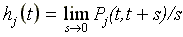
We used an event history methodology to examine the hypothesized explanations for the investing firm's exercise of option alternatives. Because these alternatives represent "competing events" (i.e., the occurrence of one event removes the partnership from the risk of the other event occurring), the hazard rate function is defined as
where h(t) is the hazard function associated with either partner buyout (j=1), dissolution (j=2), or acquisition by a third party (j=3); Pj(t,t+s) is the probability that event type j occurs in the interval between t and t+s, given that the partnership is at risk at time t. No explicit hypotheses were developed regarding third party buyouts since such acquisitions fall outside the option theoretic and transactions costs perspective of this study. Nevertheless, the occurrence of third party buyouts is a relevant competing hazard in that it precludes subsequent occurrences of partner buyout or partnership dissolution. If the occurrence of third party acquisitions is correlated with the explanatory variables, it would be inappropriate to treat these observations as right censored or ignore them altogether.
Cox's [1975] partial likelihood method for parameter estimation allows us to incorporate time dependence into the model, without specifying its form. The general form for the Cox proportional hazards models estimated in this study is:

where X(t) and Y are vectors of time dependent and time invariant explanatory variables, and [j and [j are vectors of estimable parameters [see Allison, 1984: 46-50]. We used TDA version 5.7 to simultaneously estimate the competing hazards rate model [Rohwer, 1994] with Cox's partial likelihood method.
Time-varying variables. Those variables which vary over time (including technology value, technological uncertainty, target firm's number of commercial alliances, acquisition experience, country experience, R&D portfolio - explicated below) were updated each month. Similarly, the dependent variables - acquisition and dissolution - were also updated at the end of each monthly period.
Hypothesis 1 is tested by assigning Hofstede's [1980:315] well-known measure of uncertainty avoidance to each country in our sample. We test hypothesis 2 with two alternative measures of cultural distance. First, following Kogut and Singh [1988], we measured cultural distance (CD) as a composite index based on the each of the four cultural dimensions identified by Hofstede [1980]:
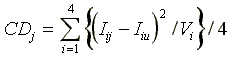
where Iij stands for the index for the ith cultural dimension and the jth country, Vi is the variance of the index of the ith dimension, u indicates the United States, and CDj is cultural difference of the jth country from the U.S.
A second measure is a more focused operationalization of cultural distance which captures the difference in power distance between equity collaboration partners. Differences in power distance between firms may be a source of trouble in partnerships and hierarchical structures as the question of who controls the firm is viewed differently be each firm [Hofstede, 1980]. Again, we use Kogut and Singh's [1988] index specified above, but compute this alternative measure of cultural distance by including only power distance for the ith cultural dimension. We call the resultant measure power distance differential (PDD).
Previous studies of equity collaborations tested several proxies of firm and industry variables and found them to significantly influence the rate at which partner buyouts or partnership dissolution occurs [see Kogut, 1991; and Folta and Miller, 1996]. Because our interest is in controlling for specification error, we merely summarize the arguments in the existing literature on these firm and industry variables and specify our measurement for each.
Value of the Partner's Technology. Following option pricing theory, the value of a call option should be directly related to the value of the underlying asset. In the context of choosing an option alternative for R&D partnerships, it is not clear as to whether an increase in the call holder's valuation of the partner's stake will result in holding or exercising the option. Since holders of real options can only capture the cash flows inherent in the options by exercising them, we expect the exercise of the option to acquire to be positively related to the value of the target's underlying assets. By the same reasoning, when the technology declines in value it becomes less attractive to own the underlying asset. Holding, all else equal, we expect a decline in value to lead to a greater likelihood that the partnerships will be dissolved.
It is difficult, if not impossible, to value firm-specific technologies in emerging industries, particularly when commercial sales have not begun. This difficulty is compounded by the fact that many firms in our sample are private, providing little public information. Kogut [1991] suggested that managers use environmental cues as heuristics for developing valuations of target firms. He used historical shipment values for each industry to develop a measure of value. Such an operationalization is not reasonable in the biotechnology industry because its lack of sales history. To overcome this problem , we created stock indices from weekly returns of nine U.S. biotechnology firms specializing in each of the four biotechnology subfields. While this approach does not capture the variations among individual projects within a sub-field, it should reflect differences across technological sub-fields. Positive movements in the value of an index signal improved investment opportunities and an increase in the value of the real option embedded in the venture.
Technology Uncertainty. The greater the uncertainty associated with the emerging technology, the more valuable is the option to defer commitment to the technology through acquisition. Large gains are possible if the technology proves promising, while losses are limited to the cost of entering into the partnership (typically, a fee paid to gain the commercialization rights). Here, technological uncertainty provides the rationale for maintaining the strategic flexibility offered by partnerships. If there is a resolution of uncertainty surrounding the value of the target firm's technology, the option declines in value and the benefit of delaying strategic commitment is reduced. Investors should choose to acquire their partners if uncertainty declines and technology value increases. On the other hand, dissolution will occur if the reduction in uncertainty is accompanied by a decline in the technology's value.
Our characterization of technological uncertainty is similar to Mitchell's [1988]. It refers to the uncertainty or volatility surrounding the future value of investments in emerging technology industries, and resides largely exogenous to the targeted or investing firms. We adopted a measure of technological uncertainty at the sub-field level of analysis. We calculated the inflation-adjusted standard deviation of weekly shareholder returns for each of the industry sub-field for a moving 26-week period which concluded at the end of the month of interest. This measure of exogenous uncertainty should allow us to capture the fact that biotechnology assets has little salvage value outside specific sub-fields.
R&D Expense. Substantial literature has confirmed the importance of industry structure on the choice of governance mode. Because of our focus on biotechnology, average segment R&D expenditures divided by average total expenses are used to control for such effects. Conventionally, the relationship of R&D expense is said to encourage integrative modes, such as acquisition, in order to provide adequate administrative control for coping with higher degrees of human and dedicated capital specific to a transaction. Using this logic we might expect a positive relationship between R&D expense and partner buyout. At the same time, transactional difficulties may be more pronounced is segments with high degrees of R&D expenditures. Thus, R&D Expense is expected to be positively related to partnership dissolution.
Number of Commercial Partners. The theoretical arguments behind the hypotheses assume the option holder has an exclusive ownership position. We need to acknowledge, that R&D firms may sell stakes to more than one partner. Similarly, joint ventures may have more than two partners involved. In other words, an investor may not have an exclusive right to exercise the option. Shared options are less attractive than proprietary options because acquisition moves by other partners can terminate an option. The non-exclusivity of acquisition rights and the availability of insider information about the venture to all partners can result in a competitive bidding process among the partners which may eliminate the spread between the present value of the acquisition and the exercise price. However, the asymmetries among partners may still allow one of the partners to capture some value above and beyond the exercise price [Chi and McGuire, 1996].
As the number of alliance partners increases, the resulting competitive bidding among partners drives up the exercise price which reduces the payoff from future acquisition and increases the rate at which established firms dissolve their partnerships. When there are fewer alliance partners, the payoff from future acquisition should be preserved, tending to increase the rate of partner buyout. The number of commercial alliances initiated by the target firm was used as a proxy for the exclusivity of the acquisition call option. The number was taken during the year of the event, or in the last year of the observation window (in the right-censored cases). BioScan was used as a source for this information.
Country Experience. There have been few attempts to discern whether investment experience in a country influences the rate of acquisition or dissolution. One recent exception is the work of Barkema, Bell and Pennings [1996], who found that firms with country experience were less likely to dissolve joint ventures, presumably because transactional difficulties were attenuated. However, we might also expect that the learning gained through experience will motivate faster exercise decisions. Since experience allows firms to more fully discern the hazards of integration uncertainty, they are likely to acquire or dissolve at a quicker rate. We control for these potential effects by measuring country experience as the sum of all equity collaborations or acquisitions that the established firm had undertaken by time t.
Acquisition Experience. Consistent with the above argument, theory suggests that firms with previous acquisition experience with a foreign culture have accumulated learning related to the difficulties of the integration process. Relative to inexperienced firms, they should be able to discern at a quicker rate, whether a target firm is a an attractive acquisition candidate or not. Acquisition Experience is time varying and is measured as the number of prior acquisitions of U.S. biotechnology firms by the established firm.
R&D Portfolio. It may be that some firms undertake more option-like investments than other firms. One might imagine that having a broader portfolio of opportunities may influence the exercise of those opportunities. In particular, holding multiple options may represent a "shot-gun" approach of investing, hoping that one alternative will eventually pay off. We expect firms holding more options are less likely to acquire partners, and more likely to dissolve partnerships. To control for this potential effect, we measured R&D Portfolio as the number of equity collaborations held by the established firm at time t.
US Transaction. To control for the differences between U.S. established firms and foreign established firms, US Transactions equals "1" when two US firms are involve, "0" otherwise.
Table 2 provides descriptive statistics and correlations for the variables. Because our composite measure of cultural distance (CD) is not orthogonally distinct from uncertainty avoidance (UA) and power distance differential (PDD), we opted to present two models. Table 3 presents estimated coefficients for both competing hazards models. The first model includes UA and PDD, while the second model incorporates CD. The likelihood ratio test for the models reveals that they are significant at the 0.0001 level, indicating the overall fit is good. Likelihood ratio tests also reveal that UA and PDD significantly contribute (p < 0.025) to model 1, while cultural distance improves (p < 0.10) the fit in model 2.
In model 1, the coefficient for UA is significant at the 0.10 level in the expected direction for the partner buyout equation.. This suggests that firms from countries that are high in UA are less likely to acquire their partners. As expected, the coefficient for UA is also significant at the 0.03 level and is negatively related to the rate of partnership dissolution. Thus, we claim support for hypothesis 1a and 1b.
Hypothesis 2a and 2b were tested with two measures of cultural distance: PDD and the composite measure, CD. Hypothesis 2a which predicted that cultural distance would decrease the likelihood of partner buyout was not supported with either variable. The coefficient for PDD in model 1 was significant, but opposite from expectations. Thus, the positive coefficient on the PDD variable suggests that greater cultural distance increases the rate at which acquisition occurs. The coefficient for CD (column 2a) was in the expected direction, but not significant. Thus hypothesis 2a is not supported.
Hypothesis 2b predicted a negative relationship between cultural distance and the likelihood of dissolution. The results from model 2 (column 2b) support this hypothesis as the coefficient for CD was found to be negative and significant at the 0.05 level. However, while the coefficient of our alternate measure of cultural distance (PDD) in model 1 in the partnership dissolution equation was in the expected direction, it was not significant. Overall, these results provide support for our prediction that cultural distance decreases the incentive to prematurely dissolve the partnership. However, these results are not robust as only one measure of cultural distance was significant. Thus, hypothesis 2b gains partial support. Next, we turn to the effects of industry and firm control variables.
The coefficients on technology value are not significant, however, its interaction with technological uncertainty is significant and has the anticipated signs. In the partner buyout equation columns 1a and 2a, the negative coefficient on the interaction suggests that the positive effect of technology value on the likelihood of partner buyout is stronger for lower levels of technological uncertainty. In the partnership dissolution equation columns 1b and 2b, the positive coefficient on the interaction term suggests that the negative effect of technology value on the likelihood of partner buyout is stronger for lower levels of technological uncertainty. These finding suggests that exogenous uncertainty has the expected effect on commitment decisions, providing added support to prior work [Folta and Miller, 1996] by verifying their significance after controlling for cultural effects.
Equity collaborations involving firms in higher R&D intensive segments are less likely to end in partner buyout, and more likely to end in partnership dissolution. The negative relationship to partner buyouts (a preference to maintain equity collaboration) is somewhat surprising given the incentives to internalize technological know-how.
We expect that target firms with more commercial alliances are less likely to be acquired. Finding a significant relation in columns 1a and 2a is consistent with the notion that adding partners drives up the exercise price for partner acquisition. However, columns 1b and 2b indicate the number of commercial
alliances also decreased the rate of partnership dissolution. This provides contradictory evidence on the effects of the exercise price on acquisition and dissolution decisions.
We find little support for the notion that acquisition experience influences collaboration outcomes. However, prior experience in a country does appear to have an impact. It significantly increases the rate at which dissolution occurs, while only marginally increasing the rate of acquisition. Interestingly, established firms with a larger portfolio of equity collaborations are less likely to acquire their partners or dissolve their partnerships.
The role of national culture on governance choice has been frequently studied. However, these studies have largely focused on the initial governance decision. By explicitly considering the role of national culture, we extend a growing body of literature examining the incremental nature of investments in joint ventures and partner firms by integrating the transaction cost approach [Beamish and Banks, 1987] with real option theory [Hurry et al, 1992; Bowman and Hurry, 1993]. We consider that national culture and cultural differences not only influence the potential for transactional difficulties, but may also influence the value that firms place on strategic flexibility (i.e., waiting). In particular, culture influences firms' preference for flexibility because it has a bearing on the level of perceived endogenous uncertainty and filters the perceptions of exogenous uncertainty. We know of no previous research which has explicitly examined how national culture influences the desire for flexibility (as evidenced by maintaining equity collaborations) or the willingness to commit (as evidenced by either partner acquisition or dissolution).
Several of our empirical findings are worth highlighting. Investing firms from high UA home country cultures are less likely to acquire their partners and dissolve their partnerships. In other words, they favor flexibility by maintaining the equity collaboration. The negative relationship with partner buyouts is also supportive of the transaction cost argument that high UA firms will avoid acquisitions because of anxiety over the transaction costs associated with integrating management teams from different cultures. While the negative association with partnership dissolution appears contradictory to transaction cost arguments and previous findings, we assert that it is not. Because previous studies did not view collaborations as transitional governance forms, there was no consideration given to the value of waiting. By considering equity collaborations in technological industries, there is a high degree of asset specificity and an incentive to ultimately integrate R&D activities. At the same time, the high degree of uncertainty in such markets presents considerable upside potential. Consistent with our findings, the benefits of holding an option (i.e., maintaining an equity collaboration) may offset the incentive to immediately acquire target firms.
Upon examination of country values for UA, Japan is among the world's most uncertainty avoidant cultures (about 1.5 standard deviations above the mean; see Hofstede, 1980:315). According to our research findings, Japanese firms might be expected to exhibit high levels of anxiety with respect to both integration (endogenous) uncertainty and technological (exogenous) uncertainty. Therefore, Japanese firms will place greater intrinsic and extrinsic value on maintaining the equity collaboration. Indeed, our findings suggest that firms high in UA (including those from Japan) are less likely to acquire their collaboration partners and less likely to dissolve the partnership. These findings support those of Hurry et al. [1992] and Chang [1995] who found that Japanese firms were more likely than U.S. firms to retain their holdings in international joint ventures.
Our findings relating to the composite measure of cultural distance (CD) support the view that investing firms seem to place greater value on maintaining equity collaborations as a means to manage integration (endogenous) uncertainty. However, these findings run contrary to results from previous research which suggest that international joint venture failures might be attributed to cultural dissimilarity among partners [Harrigan, 1985; Kogut, 1988]. Once again, we attribute these differences to the incentive to integrate R&D activities. Absent this incentive, there is little value to waiting. So, transactional difficulties are likely to be the main consideration for collaboration stability.
Our findings relating to our second measure of cultural distance is somewhat puzzling. We found, contrary to expectations, that rather than provide a disincentive to acquire culturally dissimilar collaboration partners, higher levels of PDD increased the likelihood of partner acquisition. At first glance, these contradictory results is surprising. Indeed, as Hofstede [1980] argues, differences in power distance is the most likely source of trouble in hierarchical structures. At the same time, the power distance construct represents a culture's need for control through hierarchy and internalization. To the extent that there is a large differential in power distance between partners, we may expect internalization to occur at a faster rate. Thus, while PDD may be a proxy for the degree of integration uncertainty, partners choose to resolve the uncertainty through internalization.
Our results also provide support for previous studies that have examined the role of exogenous uncertainty on the exercise of equity collaborations [Kogut, 1991; Folta and Miller, 1996]. The significant interaction between technological uncertainty and technology value for both partner buyout and partnership dissolution is particularly powerful since we controlled for national culture and firm experience. This study is the first to test for the effects of both endogenous and exogenous uncertainty on the exercise decision.
Consistent with previous studies [Davidson, 1980; Barkema et al.,1996], we found that a firm's experience in a country attenuates the sequential investment decision. In particular, we found that firms with more experience are faster to dissolve the equity relationship, presumably because there is less integration uncertainty, and hence, less incentive to delay commitment decisions. This result is opposite of traditional arguments claiming that experience with a culture should minimize transactional difficulties, leading to a lower likelihood of dissolution.
Finally, we found that the breadth of a firm's portfolio has a significant negative effect on partner acquisition and partnership dissolution. Evidently, firms that invest heavily in options are less likely to exercise a single option. This relationship is intuitively appealing, yet previously unexplored. Future research should discern whether certain cultures are more prone to such a "shotgun" approach, as is implied by Hurry, et al. [1992].
We should note several limitations of this study. The sample size is relatively small, particularly the number of events associated with partner buyouts. Nevertheless, we managed to attain statistical significance for our key variables and stability across a number of models containing firm-level and/or industry-level control variables. We expect that an increased sample size would strengthen the relationships found in this study. We employ two measures of cultural distance - power distance differential and a composite measure of cultural distance. Since we get different results for these measures, this is some cause for concern that the composite measure might mask differences between key cultural constructs. In addition to power distance differential, Hofstede [1980] suggests that partner differences for uncertainty avoidance, masculinity, and individuality may represent important areas of conflict among partners. In addition, recent research suggests that absolute measures of cultural "distance" may exhibit some directional asymmetry [O'Grady and Lane, 1996]. Future work should examine the subtle differences one might expect for each cultural dimension. Our study focused on a single industry, and sub-segments within that industry. While these segments are distinct from one another, future research should attempt to verify the expected relationships in other industries, including both R&D intensive and more stable industries.
Overall, our study suggests that cultural attributes of the investing firm and cultural differences between the investing and target firms play a significant role in predicting the rate at which option alternatives in international R&D equity collaborations are exercised. It suggests that firms find value in flexibility in the presence of endogenous and exogenous uncertainty. The hypotheses developed here and the results we found offer some promising new directions for future empirical research.
Allison, P. D. 1984. Event history analysis: Regression for
longitudinal event data. Newbury Park, California: Sage.
Armour, H.O.; & Teece, D.J. 1980. Vertical integration and
technological innovation. Review of Economics and Statististics,
August: 470-474.
Balakrishnan, S. & Koza, M. P. 1993. Information asymmetry,
adverse selection and joint-ventures. Journal of Economic Behavior
and Organization, 20: 99-117.
Barkema, H., Bell, J. & Pennings, J. 1996. Foreign entry,
cultural barriers, and learning. Strategic Management Journal,
17: 151-166.
Beamish, P. & Banks, J. 1987. Equity joint ventures and the
theory of the multinational enterprise. Journal of International
Business Studies, 18: 1-16.
Bowman, E. & Hurry, D. 1993. Strategy through the options
lens: an integrated view of resource investments and the incremental-choice
process. Academy of Management Review, 18: 760-782.
Caves, R.E. & Bradburd, R.M. 1988. The empirical determinants
of vertical integration. Journal of Economic Behavior and Organization,
9: 265-279.
Chang, S.J. 1995. International expansion strategy of japanese
firms: capability building through sequential entry. Academy
of Management Journal, 38[2]: 383-407.
Chi, T. & McGuire, D. J. 1996. Collaborative ventures and
value of learning: Integrating the transaction cost and strategic
option perspectives on the choice of market entry modes. Journal
of International Business Studies, 27: 285-307
Choi, D. 1991. Toehold acquisitions, shareholder wealth, and the
market for corporate control. Journal of Financial and Quantitative
Analysis, 26: 391-407.
Coleman, J.S. 1981. Longitudinal data analysis. New York:
Basic Books.
Cox, D.R. 1975. Partial likelihood. Biometrika, 62: 269-76.
Cyert, R. & March, J. 1963. A behavioral theory of the
firm. Englewood Cliffs, NJ: Prentice-Hall.
Davidson, W. 1980. The location of foreign direct investment activity:
Country characteristics and experience effects. Journal of
International Business Studies, 12: 9-22.
Dixit, A. K. & Pindyck, R. S. 1994. Investment under uncertainty.
Princeton, New Jersey: Princeton University Press.
Efron, B. 1977. The efficiency of Cox's likelihood function for
censored data. Journal of the American Statistical Association,
72: 557-65.
Erramilli, K. 1996. Nationality and subsidiary ownership patterns
in multinational corporations. Journal of International Business
Studies, 27: 225-248.
Folta, T.B.; and Miller, K.D. 1996. Partner buyouts and dissolution
in the biotechnology industry. CMME Working Paper, Purdue University.
Folta, T.B., & Leiblein, M.J. 1994. Technology acquisition
and the choice of governance by established firms: insights from
options theory in a multinomial logit model. Academy of Management
Proceedings, 27-31.
Gatignon, H. & Anderson, E. 1988. The multinational corporation's
degree of control over foreign subsidiaries: an empirical test
of a transaction cost explanations. Journal of Law, Economics,
and Organization, 4[2]: 305-336.
Ghemawat, P. 1991. Commitment. New York: Free Press.
Gomes-Casseres, B. 1989. Ownership structures of foreign subsidiaries.
Journal of Economic Behavior and Organization, 11: 1-25.
Hagedoorn, J. 1991. Inter-firm partnerships for generic technologies
- The case of new materials. Technovation, 11: 429-444.
Hagedoorn, J. & Narula, R. 1996. Choosing organizational modes
of strategic technology partnering: International and sectoral
differences. Journal of International Business Studies,
27: 265-284.
Harrigan, K. 1985. Strategies for joint ventures. Lexington,
MA: Lexington Books.
Hennart, J.F. 1982. A theory of multinational enterprise.
Ann Arbor, MI: University of Michigan Press.
Hennart, J.F. 1988. A transaction cost theory of equity joint
ventures. Strategic Management Journal, 9: 36-74.
Hennart, J.F. 1991. The transaction cost theory of joint ventures:
an empirical study of Japanese subsidiaries in the United States.
Management Science, 37[4]: 483-497.
Hofstede, G. 1980. Culture's consequences:
International differences in work-related values. Beverly
Hills: Sage.
Hofstede, G. & Bond, M.H. 1988.
The Confucius connection: from cultural roots to economic growth.
Organizational Dynamics, 16[4]: 4-21.
Hurry, D. 1993. Restructuring in the
global economy: The consequences of strategic linkages between
Japanese and U.S. firms. Strategic Management Journal,
14: 69-82.
Hurry, D., Miller, A. T., & Bowman, E. H. 1992.
Calls on high-technology: Japanese exploration of venture capital
investments in the United States. Strategic Management Journal,
13: 85-101.
Johanson, J. & Vahlne, J. 1977. The internationalization
process of the firm - A model of knowledge development and increasing
foreign market commitments. Journal of International Business
Studies, 8: 22-32.
Johanson, J. & Vahlne, J. 1992. Management of
internationalization. RP92/2. Institute of International Business,
Stockholm School of Economics.
Killing, J. P. 1983. Strategies for joint venture
success. New York: Praeger Publishers.
Kim, W.C. & Hwang, P. 1992. Global strategies
and multinationals' entry mode choice. Journal of International
Business Studies, First Quarter: 29-52.
Kogut, B. 1988. Joint ventures: Theoretical and empirical
perspectives. Strategic Management Journal, 9: 319-332.
Kogut, B. 1989. The stability of joint ventures:
Reciprocity and competitive rivalry. The Journal of Industrial
Economics, 38: 183-198.
Kogut, B. 1991. Joint ventures and the option to
expand and acquire. Management Science, 37: 19-33.
Kogut, B. & Singh, H. 1988. The effect of national
culture on the choice of entry mode. Journal of International
Business Studies, 49: 411-430.
Kulitilaka, N. & Perotti, E.C. 1995. What is
lost by waiting to invest? Boston University Working Paper.
Levy, D.T. 1985. The transaction cost approach to
vertical integration: an empirical examination. The Review
of Economics and Statistics, 67: 438-455.
Majd, S. & Pindyck, R. 1987. Time to build, option
value, and investment decisions. Journal of Financial Economics,
18: 7-27.
McDonald, R. and Siegel, D. 1986. The value of waiting
to invest, Quarterly Journal of Economics, 101, pp. 707-28.
Mikkelson, W. H. & Ruback, R. S. 1985. An empirical
analysis of the interfirm equity investment process. Journal
of Financial Economics, 14: 523-553.
Mitchell. W.G. 1988. Dynamic Commercialization:
an Organizational Economic Analysis of Innovation in the Medical
Diagnostic Imaging Industry. Unpublished Doctoral Dissertation,
University of California at Berkely.
O'Grady, S. & Lane, H. 1996. The psychic distance
paradox. Journal of International Business Studies, 27:
309-334.
Office of Technology Assessment. 1991. Biotechnology
in a Global Economy. Congress of the United States, Washington,
D.C.
Pisano, G. 1989. The R&D boundaries of the firm:
An empirical analysis. Administrative Science Quarterly,
35: 153-176.
Rivoli, P. & Salorio, E. 1996. Foreign direct
investment and investment under uncertainty. Journal of International
Business Studies, 27: 335-358.
Roberts, K. & Weitzman, M. 1981. Funding criteria
for research, development, and exploration projects. Econometrica,
49: 1261-88.
Rohwer, G. 1994. Parametric transition rate models,
TDA Working Paper 5-7, University of Bremen.
Schaan, J. 1985. Managing the parent control in joint
ventures. Presented at the Fifth Annual Strategic Management Society
Conference, Barcelona, Spain.
Shane, S. 1993. The effect of cultural differences
in the perception of transaction costs on national differences
in the preference for licensing. Academy of Management Best
Paper Proceedings, 122-126.
Stopford, J. & Wells, L.T. 1972. Managing
the multinational enterprise. New York: Basic Books.
Trigeorgis, L. 1991. Anticipated competitive entry
and early preemptive investment in deferrable projects. Journal
of Economics and Business, 43(2): 143-156.
Williamson, O. E. 1985. The economic institutions
of capitalism. New York: Free Press.
Williamson, O. E. 1988. Technology and transaction
cost economics: a reply. Journal of Economic Behavior and Organization.
10: 355-363.
| ||||||||||||||||||
| Country | ||||||||||||||||||
| United States | ||||||||||||||||||
| Japan | ||||||||||||||||||
| France | ||||||||||||||||||
| Switzerland | ||||||||||||||||||
| Germany | ||||||||||||||||||
| United Kingdom | ||||||||||||||||||
| Sweden | ||||||||||||||||||
| Ireland | ||||||||||||||||||
| Canada | ||||||||||||||||||
| Italy | ||||||||||||||||||
| Norway | ||||||||||||||||||
| Denmark | ||||||||||||||||||
| Total | ||||||||||||||||||
| ||||||||||||||||||
| [1] Uncertainty Avoidance | 51.76 | 19.57 | ||||||||||||||||
| [2] Power distance differential | 0.16 | 0.47 | 0.64 | |||||||||||||||
| [3] Cultural Distance | 0.58 | 1.10 | 0.82 | 0.67 | ||||||||||||||
| [4] log [Technology Value] | 5.79 | 1.11 | 0.10 | 0.17 | 0.10 | |||||||||||||
| [5] Technological Uncertainty | 0.32 | 0.10 | -0.03 | 0.00 | 0.00 | 0.09 | ||||||||||||
| [6] R&D | 41.81 | 11.22 | 0.12 | 0.17 | 0.14 | 0.34 | 0.08 | |||||||||||
| [7] Target Firm's # of Commercial Alliances | 13.39 | 12.45 | -0.05 | -0.19 | -0.17 | -0.07 | -0.01 | -0.04 | ||||||||||
| [8] Acquisition Experience | 0.83 | 0.99 | -0.06 | -0.12 | -0.24 | 0.01 | -0.01 | 0.12 | 0.02 | |||||||||
| [9] Country Experience | 3.10 | 2.81 | -0.18 | -0.11 | -0.27 | 0.26 | -0.01 | 0.12 | -0.08 | 0.42 | ||||||||
| [10] R&D Portfolio | 3.99 | 3.52 | -0.28 | -0.17 | -0.32 | 0.25 | -0.03 | 0.19 | 0.00 | 0.18 | 0.57 | |||||||
| [11] United States Transaction | 0.56 | 0.50 | -0.33 | -0.39 | -0.59 | -0.15 | 0.01 | -0.22 | 0.05 | 0.36 | 0.17 | 0.01 | ||||||
a These statistics
are calculated using pooled cross-sectional and time series data
covering 168 equity partnerships and 9,863 one-month periods.
| ||||
Variable Name |
|
|
|
|
| Uncertainty Avoidance | -0.02 †
[0.01] | -0.03 * [0.01] | ||
| Power distance differential | 0.87 * [0.39] | -0.16 [0.57] | ||
| Cultural Distance | -0.15 [0.25] | -0.61 * [0.30] | ||
| log [Technology Value] | 0.81 [0.72]a | -1.62 **
[0.60] | 0.90 [0.71] | -1.67 ** [0.61] |
| Technological Uncertainty | 13.79 [10.19] | -22.12 * [10.23] | 13.46 [10.26] | -22.89 * [10.44] |
| log [Technology Value] x Technological Uncertainty | -3.57 † [2.15] | 4.75 * [1.94] | -3.50 [2.18] | 4.92 ** [1.98] |
| Segment R&D Expense | -0.04 * [0.02] | 0.07 ** [0.03] | -0.03 † [0.02] | 0.06 ** [0.02] |
| Target Firm's # of Commercial Alliances | -0.06 † [0.04] | -0.12 *** [0.03] | -0.08 * [0.04] | 0.13 *** [0.03] |
| Acquisition Experience | 0.35 [0.37] | -0.37 [0.25] | -0.40 [0.35] | -0.37 [0.24] |
| Country Experience | 0.19 [0.15] | 0.21 * [0.09] | 0.22 [0.15] | 0.20 * [0.09] |
| R&D Portfolio | -0.27 † [0.16] | -0.16 * [0.08] | -0.32 * [0.16] | -0.17 * [0.08] |
| US Transaction | -0.09 [0.58] | 0.90 † [0.48] | -0.41 [0.59] | 0.31 [0.55] |
Log-likelihood Ratio | -262.46 *** | -265.88 *** | ||
| a Standard error in parentheses † p < 0.10; * p < 0.05; ** p < 0.01; *** p < 0.001 | ||||